Showing posts with label Soul. Show all posts

1.01.2013

Danice's Favourite 2012 Albums

12.  Devotion - Jessie Ware
Some classic UK R&B has been coming out this year, but Jessie Ware is the one most worth paying attention to.  She doesn't look like your typical pop or soul star, yet perhaps the best comparisons have been made to Sade, one of the greatest R&B vocalists to ever step out of the UK.  Whether Jessie is epically belting about your "Wildest Moment", or playfully singing a catchy pop tune like "Sweet Talk", the sounds coming out of her are raw and beautiful.  In a world of pop music that's trying too hard to be sexy, Jessie Ware's naturally sexy tone is breath of fresh air.  Also, did you know she found her earliest success in a taxi?  Yep, check this out:


11. Coexist - The XX
Since their album Islands, I have been falling in love with the work Jamie, The XX's DJ does.  He has created some of the most original and beautiful remixes I have ever heard or imagined.  With The XX, he generally creates an atmosphere for Romy Madley Croft's soft and haunting voice.  Their 2012 album, Coexist does more of the same of what they do best.  Their sound feels detached, as if they are primarily creating a world to step into, rather than communicating an idea or expressing an emotion.  This is one of my favourite records to play while doing administrative catch-up, or to discover is being played in a coffee shop.


10. MTMTMK - The Very Best
This year I was able to go see The Very Best live in Seattle, and had no idea before I got there that they even had a new record out.  I have appreciated everything this Malawian lead and Swedish DJ have ever produced, so it was no surprise that I bought the new album as soon as we got home.  MTMTMK stands for "More to Malawi Than Madonna's Kids," and features a bit more dance music than The Warm Heart of Africa did.  If you are still unfamiliar with these guys, look into both albums - the first for a more African feel, and MTMTMK for more of a sense of blended cultures.  This album also brought some attention to Seye (pronounced like Cher), the Nigerian-born, London-bred singer-songwriter who toured and collaborated with The Very Best.  I would have considered one of Seye's songs in my top 12, only that my favourite is not actually available yet.  Still, here's a video of him singing J.O.A.N.N.A.:


9.   True - Solange
I was racking my brain whether to include E.P.'s on this list.  There were a few really great and really promising short albums that came out this year, from Brandi Carlisle, Shad, and Azealia Banks, for example.  But there is something about this 7-track collection from Beyonce's younger sister that I simply can't exclude.  Maybe it's the 80's R&B throwback (the record is full of drum tracks, synthesizer, and even retro sounding harmonies) just when we most miss Whitney Houston's early years.  Maybe we've all been secretly wishing to know what Beyonce would sound like if she weren't an epic diva. For whatever reason, True feels as though it's exactly what a musical doctor would prescribe. 


8.   The Heist - Macklemore & Ryan Lewis
This album may still be in the "Under $8" section on iTunes.  That's how I picked it up, only having really listened to the two tracks that had viral videos, "Same Love," and "Thrift Shop".  I actually forgot I had purchased it, until one day a song popped into my headphones while my ipod was on shuffle (a rare moment, indeed).  Macklemore surprised me by being far more than your average white rapper.  He does hip hop justice by both speaking out on issues, and having a sense of humour, two things that I believe hip hop music does at its best.  There are a couple moments that could feel slightly preachy to some, but for the most part this is a solid record built on thought and guts.


  7.   Love this Giant - St. Vincent and David Byrne
I think this collaboration makes more sense than any I've heard of in a long while.  Two incredibly talented, brilliant, and quirky musicians from different generations team up to give us exactly what you would expect, plus some extra horns.  The only downside to Love This Giant is that Annie Clark (St. Vincent) doesn't have nearly enough guitar solos.  Still, it's clear through the work they did produce that both David and Annie respect and generally enjoy each other's music and style, which along with their stunningly complementary vocals, makes this team-up worth every effort. 


6.   ...Little Broken Hearts - Norah Jones
Like no Norah you've heard before, ...Little Broken Hearts shows off the jazz standard singer's versatility, and producer Danger Mouse's ability to transform an artist's sound.  Like Adele's 21 the year before, ...Little Broken Hearts is an album dedicated to a break-up, and although it hasn't reached nearly the level of mainstream success that 21 did, I find it refreshingly more mature and balanced on the dejected-to-irate spectrum.  Highlights for me are "Sad Goodbye", "Happy Pills", and "Miriam".  Just click on the album image to stream all the songs.


5.   Boys and Girls - The Alabama Shakes
The Alabama Shakes have the secret power of time travel.  Every time I play Boys and Girls I have to remind myself that I do not actually live in the 60's.  The album kicks off with the addictive single, "Hold On", and then does nothing less than restore my faith in Rock & Roll.  The album is filled to every last edge with lyrics of desire, anger and sadness that are only deepened by Britney Howard's soulful, raspy, low croon.  I have yet to see them live, but I've heard this is necessary, so if you have the chance, don't pass it up.  


4.   Good Kid, M.A.A.D. City - Kendrick Lamar
I did not like this right away.  At first listen, I couldn't handle the macho and misogyny long enough to get past the first half.  Good Kid, M.A.A.D. City tells Lamar's own coming-of-age story, and at first, Kendrick tries to prove himself a man with the usual tough act. In order to see him grow, you need to give the album/story time.  Punctuated by voicemails left by Lamar's parents (beginning angrily asking for the car back but eventually become gentle invitations to come home) this solid rap record leaves a surprising message of manhood: that it's not perfected in violence but in taking care of family.  Although it is heard best in context, I've embedded my favourite song off the record below.


3.   The Idler Wheel... - Fiona Apple

I had started to give up on hope that Fiona Apple would come out with another album as amazing as Tidal or When the Pawn...  She has certainly returned to the longer album title though, this time with an exactly Twitter-kosher 140 characters.  The Idler Wheel... is exactly what I want to expect from Apple: fast jungle-inspired rhythms mixed with slower angst-y ballads, held together by Apple's own eccentric personality and dark imagination, and unique percussive-style piano.  The best place to stream this one is on grooveshark, so instead of a soundcloud link, here's a bizarre video you should watch from The Idler Wheel is Wider Than the Driver of the Screw and Whipping Cords Will Serve You More Than Ropes Will Ever Do:


2.   The Bravest Man in the Universe - Bobby Womack
There was something about 2012 that brought a lot of older artists out to record.  Springsteen, The Stones, The Beach Boys and even Van Halen all released music this year, but only Bobby Womack was able to give us something that feels stunningly relevant and original, while holding a greater depth of experience and wisdom.  His age can be heard in his voice, and I think it makes The Bravest Man in the Universe Bobby's best album yet.
Stream it at the Guardian, here.


1.   Channel Orange - Frank Ocean
Someone asked me what my life highlight from 2012 was, and my first instinct was to say Frank Ocean.  I anticipated this album like nothing else this year, so it had a strong potential to let me down, but obviously it did not.  Channel Orange explores the disadvantages of living a privileged rich kid's life along with a couple deep and personal instrospective pieces that are held together by flipping television channels that offer news from the outside world.  The music is fresh and heavy R&B with a hip hop attitude, and I can't get enough of it.  If you still don't have this album, click the image to the right for a stream of it on soundcloud.  I doubt you'll last long without purchasing this one.

5.21.2012

2010 Rerun: Wake Up! - John Legend & The Roots

Here it is, the first of the Record Rerun series.  Beginning with 2010, I'll be moving backwards, picking an album from every year.

It could be a little tricky to predict that an album less than 2 years old will be one I listen to for years to come.  2010 was a decent year for music, but I have to admit, this decision wasn’t so difficult for me.  Although there were a fair amount of stand-out albums - Sufjan, Kanye, Janelle Monae, Erykah Badu, Beyonce, Cee-Lo, Arcade Fire and The Black Keys, to name a few – still, Wake Up! was a relatively quick pick.  It did help that I’ve written about a few of the albums above already.  But ultimately, this gospel-saturated collaboration between John Legend and The Roots (and a few other guests) gives off the sense that it intends not only to be a great album of its year, but an all-time classic.

In 2010, I so anticipated this record.  I love John Legend's voice and style, but am often let down by his actual song choices, so I was stoked for him to work with The Roots on some soul covers.  I picked it up immediately, and was not disappointed.  The animated cover art is beautiful, and the music is even better.  I suggest a relatively high volume for your ideal listening experiece.  Speaking of, if you want to listen along, here's the soundcloud link: http://soundcloud.com/billboard/sets/wake-up-john-legend-and-the-roots

“Hard Times” kicks off the album with some brief reflection time, as ?uestlove gives us some cymbal love, and John Legend freestyles a bit before the beat drops.  And when it does, it drops hard.  Nearly every beat is accented by something, whether it’s the drums, horns, or bass.  It's a full song, with a lot of anger-release potential, showing off just how tight The Roots can be.

“Compared to What” settles into a groove, without ever letting go of the drive already established.  As it fades out, piano runs and tambourines give us a decidedly philly-style introduction to the title track, “Wake Up Everybody”.  The duet features Melanie Fiona, who sounds best when harmonizing with Legend, but I am probably biased.  Common also makes an appearance, which is also just fine with me.  I feel like it would be a good idea for him to collaborate with John Legend more in the future.  The call to “Wake Up” continues into “Our Generation”, with the punchy response of, “let’s straighten it out”.  The invitation to accept responsibility and make things better is refreshing, and the baritone saxophone doesn't hurt either.

“Little Ghetto Boy” – first the prelude, which comes across more as a spoken word over piano and drums, and then the song – begin Side B of the record.  The song flows seamlessly, and kicks in with Black Thought rapping over a progression led by an organ.  These two related tracks represent what this album is all about: optimism in the face of pain and suffering.  Never does “Little Ghetto Boy” excuse the kid to spiral – he's expected to grow up and change his situation – but neither does it minimize the difficulty that his situation presents.  Like in “Our Generation”, a the choral response is repeated, but instead of an imperative, a different kind of hope is offered: “everything has got to get better”.

I somehow always miss the next song on Wake Up!  Even when I intentionally listen to it, by the time “Humanity” drops its reggae feel, and talking “about love the way it should be…” and I forget all about “Hang In There”.  Both songs offer optimistic hope and encouragement, and feel laid-back, which you should enjoy before you're taken to church on Side C & D of the vinyls.  

“Wholly Holy” is a song I would legitimately love to hear in a church.  On this record that calls us to not only believe, but act towards making our world more live-able, it makes sense that the spiritual overtones would be given some explicit reference.

I have a sneaky suspicion that “I Can’t Write Left Handed” was The Roots' favourite song to record.  Legend opens it up with some preamble, recognizing that, “war is always hell.  It always will and it always has been”, before launching into to this beautiful soul-folk song, telling the story of a man shot in the arm.  This song is long, builds slowly, and is performed in every imaginable collection of dynamics.  John Legend shows what he’s made of, as he repeats a lot of the story several times, yet every time brings the lyrics alongside a deep-seated emotion and soul.

One last time, I flip the vinyl over for the shortest Side of the record.  “I Wish I Knew How It Would Feel to be Free”, and “Shine” complete the song cycle, by moving the focus not just to ourselves, but letting stifled voices heard.  You should probably listen to Nina Simone doing “I Wish I Knew…” as well, because she is the bomb.  "Shine" works almost as a benediction, or a modern day version of "This Little Light of Mine".  While we move out to Wake Up the world around us, and make it better, "Shine" reminds us not to write anyone off, and let them shine on.

It is so easy to complain about everything and anything, but this album inspires hope in a way that few have the confidence to do.  Happy listening, and I'll try to be quick with posting my 2009 rerun.  Peace out.


3.03.2012

The Lady Killer - Cee Lo Green, 2010

I have a giant a soft spot for Cee Lo Green.

I have become especially aware of this since the show, The Voice, has returned. While my friends are mostly creeped out by Cee Lo's evil looking cat (named purrfect), or his tendency to flirt with his female teammates, I am utterly charmed.  Not because I am won over by his celebrity, or want to imitate his unique sense of style.  I am simply attracted by the fact that Cee Lo Green is a quirky guy who is not afraid to show it, nor is he ever notably  threatened by others' eccentricities.  There's room for everyone's brand of odd.


However, ironically, I've decided to write about his most widely accessible album to date, The Lady Killer, which is intentionally so, as he admits it's his attempt to broaden his fan-base.  To some extent, Cee Lo quiets his eccentricities in order to release some billboard-able singles, and not only did he achieve just that, but created a solid r&b album that sounds both retro-nostalgic and fresh at the same time.  Success.  The best part is, he doesn't really put his personality on hold for this record, but casts himself in two hard-to-hate roles as international spy and underdog.  Still,  even while, as the underdog, he's singing about pain and frustration, it always comes across as downright playful.

When I first bought this album, it was stuck on repeat for a couple months, but it has been a while since then.  I decided to throw it on in anticipation of his new album that's supposed to drop later this year (along with a Goodie Mob reunion album).  This week was the perfect opportunity, since the surprise snow inspired me to bus, and therefore have a bit more time for headphones in my day.  Also, I find the regular use of Bari Sax incredibly helpful in cold situations.

So let's begin at the start, with the slightly creepy "Lady Killer Theme Song", which sets a very James Bond-esque tone as Cee Lo smoothly warns that "when it comes to ladies.... (he has) a license to kill".  Although "Bright Lights Bigger City" isn't a perfect transition from the theme, it hangs on to a few Bond-sounding themes, especially violins that sit on high notes before tumbling back down to earth.  I don't know about you, but it gives me an especially espionage-tastic feeling, and I find myself itching for an entourage to escort me downtown for some weekend nightlife.  I will wear shades, of course.

There has been plenty said about "F*** You" already, but two things stand out to me as worth risking repetition:  First of all, coining "Forget You" as the censored version is some of the most creative censorship in radio-version history.  We basically get two songs for the price of one.  Secondly, lyrically, the entire thing is built on cursing out an ex that's treated him badly, and yet it is one of the most confident and fun songs of all time, full of sass and sarcasm.  Cee Lo is dancing though his heartache, making "F*** You" an ironically appropriate place for a bit of gospel music.  Example number one of Cee Lo's underdog status as well, building up our sense of sympathy.

"Wildflower" is probably lifted straight out of Cee Lo's flirting repertoire.  He pulls out every stop - horns, strings, piano, and lots of notes held forever.  I'm not going to lie, he caught my heart instantly with the line, "sexy is season".  Who can argue with that?  He might be a weird, little man, but he takes his job seriously as a professional charmer.

"Bodies" and "Love Gun" are together the album's primary nod to the never-fully-established 007 theme.  After songs of full blown volume and instrumentation, "Bodies" hits us with minimalism, supported primarily by finger snaps, a snare roll, and some muted trumpets.  It goes on slightly too long for my taste, and I'm always pleased when "Love Gun" brings us back with gun shots and a little more swagger.  I think the best thing about this duet is that, at the point we most expect to hear The Lady Killer himself feature prominently, a female voice (Lauren Bennett) is given space for the first time on the album.  The one thing that would highly improve this song is having someone like Janelle Monae du-et.  (hehe - sorry I couldn't resist).  I can't help but think they would make a sweet cat-and-mouse music video together.  What's done is done, but can this collaboration please happen sometime?


The next several songs on this album are super solid.  "Satisfied" has some more of that vintage happy-clappy energy, and in un-lady-killer-like fashion, he just wants to satisfy his girl.  "I Want You" is most of the time my favorite song on this album.  Although he starts out trying to sound like a cool player, he ends up letting everything go for his desire for his woman.  The song makes a full circle to the point that he is downright charismatic in his thankfulness to God for his relationship.  Also, I think it has to do with the arrangement of horns and strings, but "I Want You" makes me feel as though I should be walking a red carpet instead of cement on Venables St.

"Cry Baby" is another retro-fabulous fun, breakup song that stars not so much Cee Lo, as it does the Bari Sax. Here's the music video, and yes, that is Jaleel White from family matters, looking like a character somewhere between Steve Urkel and Stephan Urquelle. I mostly just want to dance with them.


"Fool for You" (which brought home the best R&B song Grammy this year) has a truly classic R&B feel and sound, and features regularly smooth transitions between the punchy, beat-driven verses and the chorus which hangs on the vocals and drops all percussion with the exception of some cymbal brushes.  At this point I'm wondering which is the act: is Cee Lo the Lady Killer, who pretends vulnerability to lure his prey, or is he an underdog dressing up to convince himself.  Either way, he has become a man of mystery.

"It's OK" sounds to me like the little brother of "F*** You".  It has the same, dance-through-the-pain kind of attitude and groove, but is less in the anger stage of grief, and more in the acceptance stage.  They say grief is less linear and more like a spiral, so I suppose Cee Lo is in the midst of a healthy recovery from rejection. In other news, "It's OK" has the least viral, but possibly best video of Lady Killer.

"Old Fashioned" is true to its name, harkening back to a 50's ballad with soul and class.  Oddly, it pairs well with the indie Band of Horses cover, "No One's Gonna Love You Like I Do".  In songs, the album ends on a mellow, slightly reflective and certainly heartbroken tone, which is why I feel the return to the loud and obnoxious "Lady Killer Theme" sounds terribly out of place.  But perhaps it is meant to draw attention to the juxtaposition of Cee Lo's underdog status with his lady-killer persona. In the end, it's all about winning over the ladies. As a follow up to his last solo record in 2004, Lady Killer might as well been titled Cee Lo Green is a Charm Machine.  

PS.In case you don't have this album and want it, you might notice that there was a Platinum edition, released November 2011, that includes two extra singles including the super-fun love song "Anyway".  Go for it, but I'll warn you that my favorite, "I Want You", is a different, less-awesome version.  So make sure you get that original song as well.  


2.03.2012

A Rant Turned Tribute

I have a bone to pick.  I can't completely decide who it's with exactly, but contenders include Rolling Stone magazine, music critics in general, and the culture of popular music.

Perhaps you would like a bit of context.  Some of you may know by now that I am a bit of a list-o-phile.  Usually I like my lists to be specific enough to make sense, but open-ended enough to have to make tough decisions, such as the greatest ______ of a particular genre or time period.  But every once in a while I love to spend some time in the vast lists that Rolling Stone enjoys dropping.  Recently a coworker and I made a competition out of seeing whose iTunes library included more of their "500 Greatest Songs of All-Time".  (By the way, I won the competition, so this is not the response of a bitter loser).  The list was not nearly as sweeping as it claimed, completely ignoring anything before 1957 and barely entering our present decade or the one before it.  I won't even bother with that list here, but it did get me curious about their similarly titled list of albums, which I quickly found some issues with.

Out of 500 albums spanning from the 1950's to now, and across the genre spectrum from Country to Rap, Soul to Psychadelic Rock, those with female participation in bands or as solo artists make up 13%.  If I were to add only those by either solo female artists and bands with front women, it would be below 10% with 45 artists.  45!  out of 500!  See the whole thing HERE.

Now, I recognize that Rolling Stone magazine is about as sausage-festy as magazines get, but it is also one of the most well-respected publications in popular music, and is, at the moment, the driving force in writing our pop music history.  So, is it the fault of listeners and buyers of music that success is only given to male solo artists, or all-male bands?  Or, is it the fault of these panels of judges, who write articles and best-of lists, painting our perception of greatness with a brush of testosterone?  

And so I'd like to lead you on a scavenger hunt for great albums by female artists that seem to be missing from Rolling Stone's list.  Seeing as I have a tendency to specify lists in some way, we'll look at one genre at a time.  First of all, is there anything missing from the world of jazz and blues, music that has indeed paved the way for all modern pop music?  Miles Davis is there, John Coltrane is there, even Frank Sinatra showed up for the party!  Then, surely Ella will make an appearance, even if only alongside Louis Armstrong, and Billie Holiday should be expected at some point with a live recording or a best-of!  I dare you to try to find either of their names anywhere.  With the possible (but not justified) argument that Ella and Billie were not writing or producing their albums, an even more stark omission is Nina Simone, who wrote music for more than 40 albums in her lifetime, and continues to be constantly quoted, referenced, covered, and sampled all over the place in hiphop and pop.

Those are just the obvious, but in a list of 500 I might also expect to see Mahalia Jackson, one of the greatest gospel voices to hear on vinyl, or Bessie Smith the "Empress of Blues" who inspired all of the above, and who also inspired many blues artists (male and female) who did make the list.  I would also implore consideration of Alice Coltrane's Journey in Satchindananda, one of a few jazz records where the front woman is not a vocalist, but a pianist and harpist.  Still, it's possible that we know of her by the celebrity of her husband.  Newer women of jazz and blues could include Norah Jones, Cassandra Wilson, or Natalie Cole.

R&B/Soul is represented relatively well on this list by the likes of some expected (ie. Aretha, Dusty Springfield's Dusty in Memphis and Diana Ross & The Supremes) and some surprises (ie. TLC, Whitney Houston, and Mary J Blige).  I'm not going to lie, I loved the fact that Janet charts with both Rhthym Nation and Velvet Rope.  Many additions I would make would have more to do with a need for updating (the list was published in 2003), to include newer records such as Amy Winehouse's Back to Black, Janelle Monae's Archandroid, or nearly anything by Sharon Jones.  At this point I might even venture to suggest Beyonce's 4, but are you really surprised?  Still, others cannot be excused by time, because 3 years is certainly enough to recognize the force and beauty of Erykah Badu's Mama's Gun, which is nowhere to be found in the 500.  Not to mention the mature and smouldering Lover's Rock from british beauty, Sade, that came out the same year.  Others that I wouldn't mind seeing on the list might be Roberta Flack's First Take or legendary Killing Me Softly, Gladys Knight's Imagination, something from Jill Scott, or Tina Turner without the abusive Ike on Private Dancer.


I'm sure I could go on, but we'll take a break and move along to Country and Folk.  I don't have a lot to say about Country music in general, and when it comes to albums, the few female-made records I would expect are here: collections of Dolly Parton, Patsy Cline, and Lucinda Williams' Car Wheels on a Gravel Road.  I do however, notice a lack of certain folk singer-songwriters.  Joni Mitchell has some representation with Blue and Court and Spark, but I would add Hejira, For the Roses and maybe Clouds (If Randy Newman can chart with 3 albums, I think Joni Mitchell is entitled to at least one more).  The Joans (Baez and Armatrading) are both missing entirely along with two incredibly prolific poets, Ani DiFranco and Kate Bush.  They would have been well represented in my opinion by Not a Pretty Girl and Hounds of Love respectively, although they each have many additional album contenders.  Tori Amos' Little Earthquakes should probably be included, and maybe her Strange Little Girls as well.  As singer-songwriters go, Tori offers not only well-written individual songs, but album contexts that invite us to find relationship between the songs.
                                         
Moving on to the genre that Rolling Stone loves most: good old Rock 'n Roll.  This genre makes up an overwhelming majority of the list, and is littered with multiple albums of The Beatles (with 11), The Rolling Stones (with 10) and Bruce Springsteen and The Who (with 8 each).  I have no problem with classic rock - and I'll freely admit to having a lot of this music, either on vinyl or mp3 - but it becomes overkill when a list so clearly wants to promote one kind of album to greatness, without considering albums that are the products of imagination and a desire to move the culture of pop music in a new direction.  It also suggests to me a "golden age" of music (7 of the top 10 are from the 60's), that doesn't consider other influences and movements enough.

That being said, this rant is really only worth writing if it is true that there are indeed women making music as well as men.  So who can replace an extraneous 60's or 70's British rock band record?  I have a few suggestions.

Patti Smith finds herself in the top 50 (at #44) with Horses, but I would love to also see her more conceptually driven Easter, which fearlessly explores themes of the religious holiday, such as death and resurrection.  I was certainly expecting some of my favorite female rockers, especially Ann and Nancy Wilson of Heart with Dreamboat Annie.  "Crazy on You" was equally snubbed from RS's 500 Greatest Songs, in my opinion, so I suppose we shouldn't be shocked.  I found myself scanning for either Pat Benatar or Joan Jett, who may have done more with singles, but so did a lot of men on the list.  For some 90's representation, I would have thought Sheryl Crow's Tuesday Night Music Club could hold its own, having won Crow the first 3 of her 9 Grammys.


Annie Lennox shows up for the first and only time on the list at #500, and even then, only with the Eurythmics.  I'm not entirely sure what that's about, but wonder if the editors of Rolling Stone have heard album giants Diva and/or Medusa.  Medusa is full of great songs written by men, many of which they consider to be "all-time greats".  Perhaps they feel threatened that a woman does these tracks so thoughtfully and originally.

Another one-hit-wonder on the list is Bjork, whose accessible Post is at #373, but her brilliant electronic masterpiece, Homogenic is left out. Homogenic is considered by many to be the best of electronic music, yet can't even scrape into the top 500 albums of all time.  If this is not an offense to women, it is an offense to the genre.  As we've already moved into the world of pop, I can't help but wonder about Mariah.  In 2003, did we still love to hate her so much that we couldn't take seriously anything she did in the 90's?  If so, it's unfortunate.  Say what you want about Mariah, but she has a more impressive range than nearly anyone on the list, and although it's pop, she's writing her own material.  All the while in heels and a mini-skirt.  Broadway divas such as Barbara Streisand and Judy Garland are also ignored, although each has at least one album that has been recognized by a Grammy.

Finally, let's take a minute to talk about rap music.  I will admit, there are not enough women in rap in general.  However, there is only one woman recognized: Lauryn Hill at #312 with her Miseducation and #477 on The Fugee's The Score, so even though they chose the best, they keep her above 300.  I understand that there is not exactly a plethora of solo female rap artists putting out fantastic albums (and RS was probably patting themselves on the back for including any rap at all), but I seriously hoped for a bit of Missy Elliott, and crossed my fingers for a taste of Salt-n-Pepa.  If they revisit the list, I would be floored if they fail to include M.I.A.'s Kala.


This is by no means a comprehensive list of women in music, but I hope it at least it reminds us that women are making music, even if male-critics like those at Rolling Stone don't seem to recognize it.  In the mean time, check out some of the artists I've mentioned.  I made it easy to get started: all the pictures (and some of the words) link to performances on youtube.

Peace out,

Danice


1.02.2012

4 - Beyonce, 2011

One of my favorite things to do around the new year is reflect on the finishing year by reading lists and making some of my own.  There are a number of artists that have shaped my 2011 with new and newly discovered albums - Bon Iver, Florence, Adele, Josh Garrels - but I've decided to talk about Beyonce's 4, because I doubt I will ever be inspired to write about any of her other albums, past or future.  And I cannot stop listening to it.

Who would have expected this?  A chock-full collection of hit after hit, that somehow sound even better together, from a woman who has built her career on singles and music videos.  Beyonce has never been what I've considered great at the art of album, but 4 is an incredibly happy exception.

"1+1" reintroduces Beyonce to us as a sexy balladess with clear control on her vocal range.  Before we dance, we are asked to remember that she is not only a beautiful, engaging performer, but a vocal contender as well.  "I Care" and "Miss You" are best paired together, both using 80's instrumentation to recall a classic pop-r&b fusion, and both wrestling with relationships either on their way out or regretfully finished.  Come to think of it, "Best Thing I Never Had" is a part of the series too - but adds some real Beyonce attitude.  Sure it's a pithy chorus, but Beyonce's never been hailed as a lyricist anyway, and it's a great song to sing at the top of your lungs in the car.  Try it sometime.

By now, we've remembered what Beyonce is capable of, but we're not sure if she's still really got the power to start the party.  By the time I listened to 4 in it's entirety I had already seen the video for the last track, "Run the World (Girls)", and was at best disappointed.  Was that going to be the strongest dance song on the album?  Certainly not.  And this is where the party begins, appropriately with "Party", which brings along with it Andre 3000 and Kanye, and a sample of La-Di-Da-Di.  It's a massive summer party track, but was unfortunately released a little too late to get the attention it deserves.

There's always one song I don't love, and on 4 it's "Rather Die Young", which feels inauthentic and silly, referencing a bad boy who is worth all the trouble.  Beyonce is getting too old for that, and I find "Start Over" to be far more believable as she searches to reignite a spark with a long-term partner.

"Love on Top" is a throwback to past divas such as Whitney of the 80's and even Diana of the 60's, as she once again shows what she can do, this time in 6 key changes.  It was the perfect song to let the world know of her anticipated Knowles-Carter child in this pop-historic VMAs performance.  You should probably watch it here if you haven't yet:

The party refuses to stop as Beyonce uses a counting down sample from Boyz II Men (good move B) to "Countdown" which is one of the most eclectic songs that doesn't sound scattered ever made in the r&b world.  The video is nearly perfect as it mirrors this collage of a song, with great dance moves and even greater outfits.  If you haven't seen it, you should probably watch it here:


THEN, "End of Time" comes on, with its massive horn shots and epic marching beat.  This for me is the highlight of the album.  By now I am sold on B, and all that is left to do is shake whatever your mother gave you, regardless of how it compares to what Beyonce received from her mother.

"I Was Here" slows everything down again with the track that will likely be played at Beyonce's funeral.  Written by legendary love song writer Diane Warren, it might be a little melodramatic for my taste, but every diva needs to plan ahead for a memorial or life-time achievement award.

The album ends with "Run the World", which actually has an incredible beat and similar energy levels to "End of Time", but falls flat when compared to other girl-power/feminist anthems like Destiny's Child's earlier "Independent Women".  The video has some amazing dancing, but it mostly frustrates me by what it could've been.  Still, considering this post has been video heavy, I might as well conclude one last performance that almost convinced me of this song:

When I think of 2011, I will undoubtedly think of Beyonce's 4.  What will you think of?

12.08.2011

My Beautiful Dark Twisted Fantasy - Kanye West, 2010


*Note: I wrote this blog draft back in November and forgot to finish/post it!  Better late than never...
I have been thinking about Kanye West quite a bit lately.  Perhaps because of my favorite November game - attempting to predict the Grammy nominations - and now that they have been announced, My Beautiful Dark Twisted Fantasy has become the most talked about album, not only because of the nominations it has received, but also those it has evaded (namely, Album of the Year).

What do I like about Kanye's Beautiful Dark Twisted Fantasy?  Well, to begin with, it's a great title.  The album not only embodies each descriptor, but holds them in tension with one another.  The fantasy often leaves us (and Kanye himself) wondering if he's bat-poop crazy, yet always in awe of the demented beauty in his stories and sounds.  And sights too, if we've watched "Runaway", the accompanying short film that makes use of all but 4 of MBDFT's songs.  

But for now, this is a post about the listening experience, and the album begins with Nicki Minaj quoting(ish) from Roald Dahl's "Revolting Rhymes", setting MBDTF up as one of those classic, twisted nursery rhymes that we routinely censor and disney-fy.  Not that I think we try to child-proof Kanye, but perhaps it's on this album where he most deeply attempts to come to terms with the person that he feels he truly is, with the person of his celebrity.  "Dark Fantasy" kicks off the album with an almost Moby-esque repeated line over piano chords, long before he funnels to the center of his psyche, peaking at "Monster" and then spirals back along a slightly different path, getting "Lost in the Woods" along the way, and finally wondering who can survive America - perhaps the source of his insanity.

Kanye can't help but offend most people at some point.  He certainly would like to. But I appreciate that the shock is rarely for shock value alone; He actually has some really great motivations. The song that is getting the most Grammy attention, "All of the Lights", is epically full of everything: guest appearances, horns, catchy hooks, and an anthemic sense of greatness.  At face value, the song is about Kanye walking in on his girlfriend cheating with someone else, and him wanting to reveal the truth with the brightest lights possible.  It may seem hypocritical if he weren't starkly honest with his own imperfections on tracks like "Runaway" and "The Blame Game". The whole album is really a call for turning on the lights - to quit hiding what we're not proud of.

I am finding it difficult to write about Kanye's Fantasy in a linear fashion, and I wonder if the songs simply aren't meant to interact with one another that way.  We are meant to think of "All of the Lights" during "Hell of Life", and we are meant to hear "Gorgeous" echoing in our mind when listening to "The Blame Game". Kanye has provided transitions with intentionality and artistry that is hard to beat - it seems he is following a true and free flow of his own thoughts.  The songs and themes feed into one another. Together the songs work at getting to the bottom of what makes Kanye West tick: they explore a mourning of his two greatest role models (his mother and MJ), his experience of celebrity, and his incredibly dysfunctional relationships with all female creatures; They bring some of the best and most eclectic artists in the business together, from Bon Iver to John Legend, to create something even better than Kanye could do by himself (GASP!?); They creatively combine all the things Kanye has done best on his previous 4 albums: the raw, catchy hooks of College Dropout and Late Registration, the dark and epic sense from Graduation, and the experimentation of 808's and Heartbreak.  And I know I could say that he has done all of these things more successfully together on My Beautiful Dark Twisted Fantasy.

Let's rewind to some of the stand-out moments on the album.  Because it was leaked early, many of us heard "Power" before anything else, and while it sounds like a political question, there is something personal about it as well.  What is the power we have handed over to Kanye himself, or any one person for that matter, why do we do it, and does anyone deserve it?  Meanwhile, KWest is not about to let go of any he finds.  Even when he offers a confession of sorts in "Runaway", we know it is a backhanded apology, as it proves that none of us are actually ready to run away from him.  He knows he deserves to be dropped, but lets us know on an addictive beat and catchy hook.

Recently for my birthday I was given Blood Bank, The Bon Iver EP from which "Lost in the World" gets its foundation (the song "Woods").  I keep listening to this song, trying to imagine Kanye hearing it and thinking, "I can make that even better".  In its own right, it is hauntingly beautiful.  And although I know several haters (or Indie purists?) who will vehemently disagree with me on this, but there is something that Kanye really does add to this track.  He seems to have made it his own, and although very different from Bon Iver stylistically, both artists seem to deeply wrestle with and understand the concept of lost in a deep way.  For me, "Lost in the World" holds its own more than any other track on the album, and yet every song is given context within this bizarrely personal and introspective Kanye collection.  Whatever you think of this egotistically, self-proclaimed workaholic jerk-off, MBDTF is an honest look at a complicated man that at its best calls us to question our own motives and behaviour, and at its worst sounds good.  Sounds like a grammy-contender to me.

5.07.2011

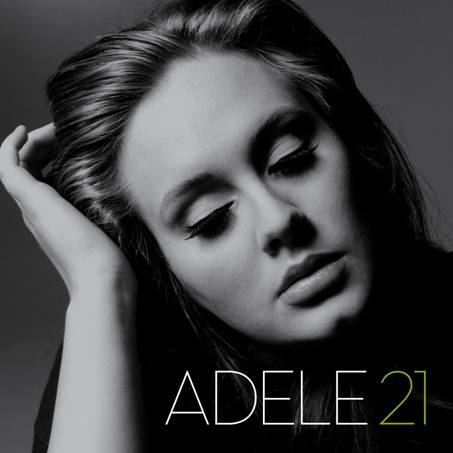
21 - Adele, 2011

I've been attempting to finish a post on the magnificent Janet Jackson's Rhythm Nation, 1814 for the past couple weeks, but can't seem to.  I'm sure a large part of the delay is the fact that I'm awaiting a vinyl copy to come in the mail, and want to have listened to it once before finally publishing anything.  That's what you have to look forward to.  In the mean time, I've been going through a bit of a music funk.  I'm tired of almost everything I've heard before, but can't seem to find the energy to listen to anything new.

The one exception has been Adele's second album, 21.  Yes, it's titled from the age at which she wrote the material, and yes, that throws me off every time considering the emotional depth and maturity that echoes through most of the tracks.  I have to admit, this album is growing on me with every listen.  As a follow up to 19 I immediately found it disappointing.  Don't get me wrong, I fell in love with "Rolling in the Deep" like everyone else, and was playing and re-posting her performance at the Brit Awards of "Someone Like You" along with the half of facebook.  But after my first listen, I felt that the rest of the album couldn't live up to these two power songs.

I still think they are the strongest on the album along with "Rumour Has It".  Yet at some point I gave the rest of 21 another chance, and this time I imagined that it was a backwards sandwich - the goods at either end with mostly boring essentials in the middle.  Eventually it morphed into a Lasagna, where the cheese is still on top, and most of the good juices drip to the bottom, but really, it's all good.  Something tells me I'm hungry...

As I mentioned, 21 begins with a bang.  The album is an exploration of a particular breakup, but instead of opening with melancholy, Adele comes out swinging.  There is indeed a fire in her heart, and it's contagious.  I guess the first two songs represent the anger stage of the grief cycle.  That's my favorite.

"Turning Tables" jumps back in time to the moment she realizes a breakup is necessary, and although it's a good song, it has an annoying tendency to get Rihanna's "Unfaithful" in my head.  I'm no Rihanna-hater, but this is really one of her worst.  Still, I shouldn't take out my feelings on Adele; it's not her fault that Rihanna wrote a catchy tune that talks about being a murderer.

The one song I haven't changed my mind on is the next: "Don't You Remember".  Adele, you are so much better than a shmultzy country song.  I know every breakup album needs a depression-infused-regret song, but this can not be it.  I honestly think I would have enjoyed this album much earlier if this wasn't included.

And now that we're past it, I can relax.  It gets better from here; it's a steady increase of good tuneage.  "Set Fire to the Rain" is quickly becoming the spicy meat in my Adele sandwich... or lasagna.  It's the ideal Adele instrumentation that starts with piano at the foundation and builds through the verses to create a climax at the chorus with strings and an epic feeling chord progression.

I love the punctuated piano shots of "He Won't Go", and I do tend to sing along, so perhaps it'll still grow on me, but right now I'm mostly excited for the ballads to start.  "Take It All" feeds that craving.  Pure, soulful Adele-voice, with the tiniest dab of gospel choir.  I kind of wish she saved this one until later, because it's hard to go back to the poppy "I'll Be Waiting".

Something about "One and Only" sounds like it should be in Dream Girls (Am I alone in this?).  Maybe that's why I feel like it doesn't hit as hard as it might be trying to.  I do LOVE the bridge, where she gives him a little understanding:  "I know it ain't easy, giving up your heart."  Almost wish it was a song in itself.  Then Adele does something I never would have expected.  She covers the Cure's "Lovesong".  I really like this a lot by itself, but I'm still not sure how it goes with everything else.  Are we meant to hear that she's ready to love again, is it denial, or does she actually feel like she'll love the D-bag forever?  I'm a little confused.

I forgive and forget everything that came before as soon as the arpeggios of "Someone Like You" begin.  This son makes me melt all over, no matter where I am; I become that dork on the bus with the iPod who closes her eyes super dramatically, and worries everyone around that she might burst into tears, and no one will know what to do.  But hey, you try to listen to this tragic tune without controlling your emotional reactions.

Here's that post I love to share.  I have to go cry now, and no, I don't have time to talk about whatever the bonus track is that came with my iTunes download. 

2.14.2011

ArchAndroid - Janelle Monae, 2010 (Part II)

I have trouble knowing exactly how to understand the two Suites found on The ArchAndroid.  What really throws me off is that the first Suite (Monae's album The Chase) and presumably her fouth/last Suite are albums to themselves.  Why has she put the middle two on one epic album?  Are they incomplete without each other, or was it simply practical?

Although the two Suites are distinct from one another separated by their overtures, the album is listened to in its entirety.  Never have I thought to myself, 'well, I think I'll just listen to the third suite of The ArchAndroid now'.  The album is divided, but it's still one album: If Monae really wanted separate listening experiences, she would have turned it into a double disc at least.


And so here we are where I left off: The third Suite's overture chiming in, interestingly enough not only foreshadowing the melodies to come, but also picking up on themes provided primarily by the final song of Suite II, "Mushrooms and Roses", further evidence that there is something more substantial linking these particular two Suites.

"Neon Valley Street" moves directly out of the Suite III Overture with a much smoother transition then that of Suite II.  It feels almost like a song meant to give you a bit of time to remember where and when you are in the performance, and settle into your seat for the second act.  "May the song reach your heart" beckons the listener back into the story, and by the time Janelle's robotic rap starts up I am hooked again.  The speaking outro could just as easily be the intro to "Make the Bus" which abruptly begins with Of Montreal's Kevin Barns voice which is totally creepy, and works super well with the whole science-fiction vibe.

In fantastic form, Monae proves that she can indie it up, and then move into "Wondaland", whose melody is reminiscent of the catchiest of an Earth Wind and Fire track.  I find myself humming it when I'm walking around work, or waiting for a bus on a regular basis.

The next two tracks are on the mellower side, "57821" (the number referring to Cyndi's droid number) points to her chosen-ness.  Sir Greendown is both her lover, and biggest believer in her being a Messianic figure, and it seems that this song suggests that even her droid number somehow prophecies that Cindi will indeed be the one to save Metropolis.  Musically, the song layers harmony with Monae and Deep Cotton, and reminds me of something that Fleet Foxes would do.  (Have I mentioned that her genre diversity literally blows my mind?)  "Say You'll Go" is haunting and beautiful, and comes across to me as a duet between Janelle and the piano.

Finally, "BaBopBye Ya" which transitions through a whole bunch of varied sections, and yet always makes me think of the James Bond movie songs that scroll during the opening/closing credits.  You know, like this:  It allows the album to end while still holding an intrigue and mystery as to what is to come with Suite IV.  I'm ready for it, Janelle Monae!

The ArchAndroid, though only the middle of a story, has a lot to say.  About love, freedom, race, and boundary crossing.  And it is definitely worth a listen.

10.15.2010

I Never Loved A Man the Way I Love You – Aretha Franklin, 1967


When I bought Tom Moon’s 1000 Recordings to Hear Before You Die, I made two lists: recordings that sounded interesting that I should check out at some point, and albums that I should actively pursue and pay money for, pronto.  I Never Loved A Man was in the second category.  I didn’t already own this record because I’ve always thought that Aretha was a hit-maker, but not necessarily an artful album-releaser, so I was surprised when Moon listed two of her albums, (along with Amazing Grace, which I’m still in search of for cheap on vinyl) instead of one really good collection that included all of her power ballads and historic gospel tracks. 

So anyway, this has been on my purchase-upon-sight-list for about half a year now, and I found it recently on a Sabbath Monday record shop stroll.  The album artwork is truly one of Aretha’s few beautiful covers, with the Queen of soul herself looking pensive and candid.  As Tom Moon directed, I remembered that this album historically propelled its heroine both into the mainstream, and onto a level shared with the fathers of soul, and listened to it as a beginning.  I pretended to have never heard neither the crisp and lively voice that was about to burst from the speakers, nor what has become The feminist anthem of our time.  I imagined that I knew ‘Respect’ only because Otis Redding recorded it first, and that the last time I heard strong feminine soul music it was through the vocal chords of Jazz’s triple-threat: Billie, Ella, and Sarah – powerful and deep, yes, but a different game entirely.  I placed myself in 1967 as best I could. 

And this record completely.  Blew.  Me.  Away.

She begins with ‘Respect’.  If that by itself doesn’t demand it, I don’t know what does.  She is bold and I can’t take my ears off her, because she means every word, every horn shot, and every pitch inflection.  She takes Otis’s ingenious-to-begin-with track, and gives it a whole new meaning as she represents the other half of the human population, bringing the song into the hearts of generations of people – men and women alike. 

And then, just when you think this woman has established her confidence and strength, she drops the saddest song in the world.  When anyone else sings ‘Drown In My Own Tears’, it’s nothing but melodrama, but I am pretty sure Aretha is channeling Billie Holiday, because I believe every word. 

The remainder of side-1 continues to dig deep into the emotional life of this mesmerizing woman of strength and beauty, while highlighting original tunes of herself and her fellow musicians (such as Soul Serenade which was written by T Sax player, King Curtis).  The title track makes it clear why she was launched onto the billboards, and is not nearly played enough compared to some of Aretha’s other huge singles. 

I never want to skip a single track on this record, but I do start to bounce a little in anticipation of flipping it over.  There is something about the second side of a record – and I say that especially in regards to this one.  Side-2 begins with the three most fun and groovy songs of the album, ‘Dr. Feelgood’, ‘Good Times’, and ‘Do Right Woman – Do Right Man’ (which connects gender-equality and right-relationship perfectly with head-nodding and chair-dancing), and then they are coupled with the desperate, sad, and yet hopeful ‘Save Me’, and Sam Cooke’s track that is strained with urgency: ‘A Change is Gonna Come’.  

I Never Loved A Man the Way I Love You is a true gospel album that speaks, no, sings of both the best and worst of life from the most honest place possible, and ends looking forward with ample faith and confidence.  I feel like I’ve laughed and cried, and am officially ready to start the day.  At 2:30 in the afternoon on a Friday.  

9.30.2010

BJ & Dawn: The Land of Make Believe, 2010

Today marks an historical moment.  This is by far the most recent release I have ever written about.  This past Tuesday BJ Block and Dawn Pemberton's The Land of Make Believe was released on iTunes, but can also be found on cdbaby.  It's the work of BJ Block and his friend Dawn Pemberton, who after having many successful shared shows have finally written some music together, and the result is refreshing and uplifting.  Local Vancouverites BJ and Dawn are each incredibly talented musicians, but this is definitely one of those collaborations where the sum is even more than its parts.

 The album notes on cdbaby describe The Land of Make Believe as "a children's record for grown-ups," and when I read that I laughed out loud.  That is exactly what it is.  BJ's guitar lines often sound 80's-Sesame-Street-inspired, and the references to the classic television show get a little less subtle when two tracks, "You Happy?" and "Up and Down" lift direct samples from my favorite Sesame Street guest: Little John John.  The result?  Wisdom from the mouths of babes, and a nostalgic smile on my face.

I'm getting ahead of myself though; those are nearly the last songs on the recording.  "Just Be" beams us straight into a happy "make believe" world, without it feeling too foreign a place.  In fact, a lot of the album has an optimistic take on life in a way that is almost otherworldly, yet Dawn Pemberton's soulful voice make it thoroughly believable. 

When "Unlucky"'s dirty bass line begins to groove I find myself unexpectedly weighing the ever-debated paradigms of choice vs. circumstance.  "Turn It Around" feels a bit like a continuation of the same thought, but I don't find it quite as strong.  There are, however, some pretty boss guitar solos.  And I am left wondering whether to call this jazzy soul or soulful jazz.

The next stretch of songs are my favorite, probably because they are all danceable party tracks.  "You Happy?" makes it clear that this is far more than a "children's album for adults," but the kind of album that anyone can enjoy.  I am seriously thinking of getting it for my parents, my brother who has three young children, and my teenage nephew who plays guitar.  And I can literally think of nothing else that would be a good gift for all three of those demographics.  Except maybe food. 

By the time I've thought this thought I realize how perfectly appropriate the name of the next song is: "Everybody's Party."  BJ and Dawn just want everyone to have a good time, and I think they're accomplishing their goals pretty well.  And though the last couple songs have done their job at creating a certain mood for the room, I am quite sure that "Up and Down" makes me want to do the muppet dance (you know, the one with the limp arms?) all on my own.  I can't help imagine the guitar licks expressing the movement and language of some ridiculous new Jim Henson creature popping up around buildings and from behind trash cans.

The album is rounded out by two slightly more reflective love songs, "Without You" and "Tender," which do their part in making me crave more from this duo.  BJ and Dawn to answer your question, I am happy too.

7.20.2010

Lauryn Hill: The Miseducation of Lauryn Hill, 1998

I know, you thought I had completely given up on this venture. Well, so had I. Not intentionally. I can't exactly blame business for my lack of writing, because the truth is, I wrote the most when I had the most school work to do, and since graduating I haven't had nearly the deadlines! Perhaps I've been at least partially word-paralyzed by the immensity of the album that has for months now been my next listening project: The Miseducation of Lauryn Hill.

Miseducation is an album that I never need a reason to play. In 1998 it rightly swept the Grammies, and gave a ridiculous know-it-all teenager a strong down-to-earth and talented female role-model. Although I hadn't experienced half of the life Lauryn sings about (love, motherhood...) I felt as though she was singing words from my own soul. Maybe she was just showing me where my English-raised soul was located. Either way, it was an experience of something much deeper than cool sounds.

So I will try my best not to wax sentimental here. Without the nostalgia, which I do realize can be terribly powerful, there is plenty to appreciate. Let's start with the cover art. We find ourselves looking down on a sloped wooden desk, like many times before, oblivious to the lesson spouting at us, tracing with our finger the outlines scratched by earlier students, and wondering who sat here before us. It's clear what we have in our hands is a story of a student who has become the teacher. As soon as the record begins our interest is peaked even further when we realize that our protagonist is missing from the roll call... and my mind's camera seems to pan out and zoom to the real location of Lauryn.

And this is when I tend to wake up. Whenever The Lost Ones kicks in as my alarm, Lauryn spits words at me with a beat that makes it very hard to remain horizontal. Her words are harsh and motivating with a "wake up and pay attention" feel, as she calls her listeners on every mistake of pride and hypocrisy. We're getting ready for a lesson. And it's clear once we're back to the classroom that the topic of the day is love. The entire album moves between two educational settings: the classroom and wherever Lauryn is, and it seems to frame the record as a lesson or at least discussion on the definition of love.  

Yet Lauryn's first love song of the album is not what we might expect from such a lesson! Instead of being about a beautiful man or incredible sex, it's about choosing to keep her child, Zion, and finds her focus on spirituality, complete with a backing gospel choir and the prayer-like solos of Carlos Santana. Meanwhile back in class the kids are talking about what it's like to be in love.

Superstar and Final Hour have always felt like a pair to me and even though they have entirely different feels, they are connected by their concern with being real, calling artists away from selling out with choruses like, "Music is supposed to inspire," and "You can get the money, you can get the power, but keep your eyes on the final hour". She draws attention away from celebrity to personal integrity ("I'm about to change the focus from the richest to the brokest") warning us all to "watch out what you cling to".

When It Hurts So Bad begins to sound a little more familiar as an R&B ballad of unrequited love, and has never gripped me like the rest of the album, along with I Used To which I barely noticed. More than that, its seeming fickleness bugged me: She used to love him but now she doesn't? What's that about? Yet I was forced to pay more attention this time considering not only Lauryn, but Mary J. is also belting out the lesson. The song is really about a unhealthy relationship (abusive?) that is suffocating these strong, beautiful women. I wonder if we are meant to experience the juxtaposition of the fickle sounding background hook and the verses that reveal a true salvation song - much like an outsider might react to a breakup, without knowing the whole story.

Forgive Them Father may sound a bit preachy, but it also proves to me that no one can rap biblical references like Lauryn can. Is she a prophet? It could explain the crazy she now finds herself in.

I have only at this point listened to half of the album and still there is plenty left to say! Nothing Even Matters reigns as the most stereotypical love song on the album, completed by dueting Lauryn with D'Angelo who you do not even need to look at to be physically attracted to (although looking wouldn't hurt). Still, organs add a really unique texture to the track, and the finger snaps are as groovy as finger snaps have ever been.

From here on out, we are deep in love, metaphorically and literally. With Lauryn herself. Ex-Factor is a true-to-life reflection on the complications of love and breaking up, where the singer flits between being the one trying to let go to the relationship, and the one desperately hanging on.

Doo Wop was easily the biggest deal from this album. Everyone remembers this song, and everyone should remember the music video. This track is the perfect example of how great Lauryn is at everything she does: we have layers of perfect old-school soul-filled harmonies, exciting energy, and the heaviest fattest rhymes proving that "female rapper" is no oxymoron, all the while spitting a lyrical truth that though we might call it love, some guys/girls are only about that thing.

The retro feel of Doo Wop (That Thing) launches us into the nostalgic track Every Ghetto, Every City, full of references of early hip hop years that give me the imagination that it's where I'm from, even though I'm a white girl from a suburb called New Westminster.

Everything is Everything at the moment does nothing but remind me of Mia Michaels on So You Think You Can Dance. Everything she loves is "everything". Every instrument on this track hits hard, like Lauryn's rhymes, which give a contrasting background to her smooth vocals on the verses and choruses. Ms. Hill  reminds us that change is always around the corner, so we need to take advantage of what we're given in the time being to make that change a good one. Or maybe, slightly more far-fetched, that regardless of how "schooled" we think we are, we always have the chance to be educated by life. Yep, that was far-fetched. Sorry.

The album concludes (but doesn't finish) with the title track, that's given a vinyl record quality, and I'm forced to imagine what it would be like to have this album on vinyl for real. The organ and keyboard are superfluous and kind of sound like church. Well, what I imagine a black church to sound like. A combination of a black church and my dad. Ok, I'm taking on a bit of Lauryn's crazy now...

Finally The Miseducation of Lauryn Hill wraps up with two bonus tracks: You're Just Too Good to be True, and Tell Him. I think they're bonus because we're not really meant to hear them as a part of the story (whatever that may have been for you), but they're applicable and appropriate. I love these tracks, but I'm going to end this here. I feel as though I've made up for months of missed writing, and these songs are primarily meant to be enjoyed and not talked about.

Peace out,
Danice

12.23.2009

#10) Amy Winehouse: Back to Black, 2007

Why yes, this is my most embarrassing album on the list, thanks for asking! But as hard as I tried, I couldn’t seem to leave it off. Even though I don’t think we will ever hear anything remotely interesting or intelligent from her again. Even though I think in many ways, the album is a humongous fluke, and should not have gained the popularity it did. Even though Amy Winehouse herself really does not deserve to be on anyone’s top list of anything. Here she is, paving the way for the end of this decade, for white girls from Britain making good soulful music, like Adele and Duffy - who I enjoy far more - but must recognize that they probably would not have made it into the mainstream without Ms. Winehouse

I have decided to not spend a great deal of time in defense of why any particular album is on my list. However, there are two specific things that I must draw your attention to that also act as points of defense.  The first is the quality of production.  Back to Black gives us an old Motown sound and feel that works, even with Amy’s foul-mouth and bad attitude.  Other than Mark Ronson for production, I would give nearly all the credit to the backing band. The Dap-Kings are hands down the number one reason that your body can’t not groove out when you hear nearly any track on this album.   Just listen to You Know I’m No Good, and its phat beats layered with down and dirty saxophone and cutting trumpet tones. If it were up to me, I think I would have started the album with this track, but it’s Rehab that actually kicks it off.

In a way, the album mirrors the way Winehouse effectively walked into the mainstream brashly and unapologetically. Rehab begins as if we’re already in the middle of a conversation, as if we’ve already accused Amy, without having any introduction to her. 

It takes a couple tracks before completely blowing me away though.  What it takes is Me and Mr. Jones, and a brand new use of the f-word: “f---ery”. Only she could get away with making up a word and working it into nearly every verse. It has made it’s way up to my all time favorite use of an obscenity in pop music, based on its originality alone!

A few minutes later as Just Friends is blaring on my stereo with that its super groovy offbeat Bari Sax and horn shots, I recognize that this is a rather appropriate album for the Christmas season, considering the stereotypical plethora of alcoholic beverages and mood lighting. This calls for a Hot Chocolate. Spiked of course. And I return to listen to the rest of the CD while I stare in vain at our house’s 2000 piece puzzle. I don’t think the drink will help with the puzzle, but it sure makes Amy sound even better. No wonder she doesn’t want to go back to rehab!

The title track, Back to Black is so wonderfully bitter, it’s hard not to seethe at any old fling that went wrong. A sample of inspiring lyrics: “We only said goodbye with words… you go back to her, and I go back to black”. Oh the glory of dramatic sexual tension.

And how else could she follow up that song but with Love is a Losing Game. Here Amy puts aside some of her rage, and sunk slightly into a classy depression. You know, the kind where a very sad woman sits alone in her apartment wearing a red party dress? Well, that’s what I imagine. And unless I get up and do something, I’m going to begin melancholing with the best of them. Why yes, I did just use that as a verb! Amy’s inspiring to expand my vocabulary through the art of BS. Thanks Amy!

Luckily I don’t need to get up after all, since Tears Dry on Their Own strikes up. It sort of reminds me of a really ironic TV show theme song. But in a good way… and before I know it, emotions shift again with Wake Up Alone. At this point the album starts to feel somewhat manic-depressive. Still, I can’t help but love the old-school vocal harmonies on this track.

Finally, her ending with He Can Only Hold Her works similarly to Rehab in beginning the album. I can’t help but think that the album isn’t trying to be an entire separate entity, but instead is just a continuation of the great R&B that already exists.  I don’t want to move on to something new; I want to keep listening to good music all evening: I’m jumping all over my funk and soul playlists.  Amy (and her crew) inspires me to return to that classic Motown sound I haven’t listened to for a long time, and that deserves a great many thanks.