Showing posts with label album. Show all posts

10.15.2012

2007 Rerun: For Emma Forever Ago - Bon Iver

I have had so much difficulty in motivating myself to write about my 2008 rerun album this particular season, so I have decided to skip right to the album I chose for 2007 instead. Along with Radiohead's In Rainbows (which I gave the top spot in my top 12 albums of the '00's and wrote about here), there is no question in my mind that the album of 2007 I'm most likely to 're-run' is Bon Iver's debut For Emma, Forever Ago. 


Not only did For Emma shape what we would expect from Justin Vernon and the rest of the Bon Iver crew, it also seemed to speak directly to our hearts (especially of the broken variety) through barely-comprehensible lyrics and sparsely produced acoustic guitar.  The truth is, we tend to love an album with a story, and this album has a particularly good one.  Vernon had hit rock bottom with both his romantic relationship, and his band at the time.  Carrying his grief and pain into solitude, he decided to process by moving to a secluded cabin to write, play, and record some songs.  The result: an album of intimately expressed and beautifully written tracks full of atmospheric tension.

The record begins with Flume, a song covered by none other than Peter Gabriel himself.  See what you think of that, here. I'm not sure what I think about understanding all the words in this song, since part of what draws me into the raw emotionalism of Bon Iver's music is the way his Vernon's voice makes it hard to make out the english words. There is a sense that the only language that is clearly being spoken is that of music, and when a word or phrase does break in to my consciousness, it becomes especially meaningful.  One of the clearest sounds in Flume is a muffled echo, reminding me that when grief is most poignant, sometimes nothing else sounds clear. 

Although Lump Sum begins with monkish motet-like harmonies, the song picks up with a faster pace, without losing the sadness that permeates the entire album.  The echoey sounds continue in the harmonies, and the song fades perfectly into Skinny Love, arguably the most popular song from For Emma..., and for good reason, since few break-up songs are able to so honestly hold in tension such raw emotion with thoughtful reflection.

The Wolves (Act I and II) slows down and emphasizes harmonies that remind me of Fleet Foxes.  It moves from being nearly the sparsest track on the album, to being the most dense, complete with a horn section and chaotic drum set solo, and finally returning to the sparse voice and guitar feel it began with.  I feel as though if I took a bit more time with this song, I would find all five stages of grief represented.  Someone else can do that though.  I'm moving on to my first love of this album: Blindsided.

Just this listen through, I realized was how clear Vernon's vocals are on Blindsided.  It seems as though the only thing he can make sense of verbally is his feelings from being blindsided, and his continual reeling from the shock.

Creature Fear and Team are two songs that carry the most volume and energy on For Emma, but instead of coming across as angry, they sound confused and desperate.  Team is also the one lyric-less track on the album (though Vernon's voice and whistle can still be heard), but I hardly notice this because of how Vernon treats his voice already like one of the instruments.

For Emma seems as though he has moved to a point of considering closure.  Don't get me wrong; he's still fairly bitter, ("Go find another lover... to string along") but the relationship feels "forever ago".  My favourite part of this song are the horns.  The strumming pattern gets old, but it does carry this sense of moving forward, one step at a time.  If the album ended here, I think it would sound like a fabricated happy(ish) ending, but luckily it does not.

Vernon ends with an "excavation" - Re:Stacks is a reflection that questions the entirety of his lost relationship.  He plays with the metaphor of gambling in a way that is full of both sadness and hope.  Hope, because there is a hint in the last line that the album itself is a part of the process towards moving on.  He may have hit rock bottom, but he knew exactly where to channel that painful, chaotic energy: into an album that wrestles with his fears and griefs vulnerably and honestly.  This is an album that I will return to, not only when I am at my worst, but perhaps especially when I am.

2.13.2012

Barton Hollow - The Civil Wars, 2011


I am so happy that after last night's Grammy Awards, most of America is now aware of the force that is The Civil Wars.  The first time I ever paid this duo (John Paul White and Joy Williams) any attention was while watching So You Think You Can Dance last summer, when a group routine was choreographed to their beautiful "Poison & Wine".  Now, I love this show with a passion, and it was a lovely, well-danced routine, but I remember trying to focus on what was happening visually, while being completely wrapped up in what was happening audibly.  And actually, looking back I don't think the choreography does the song justice, but you can decide that for yourself, and watch it here:


"Poison & Wine" became their first widely received track, having also had play during a Grey's Anatomy episode - I should really start watching that show just for the exposure to emotion-packed songs by new artists.  Soon enough however, I was listening to their whole album, Barton Hollow, and most thankfully, my roommate Beth bought it on vinyl when we got to see them live at The Vogue in November.  So, here I am, on my day off on the morning after the Grammys, fully expecting to do a Whitney tribute blog, or maybe finish off the Billy Joel one that's been sitting in my drafts for a week, and all I can think about is The Civil Wars.  And apparently I'm not the only one, with Barton Hollow climbing back up to the #5 download on iTunes this morning!

So I slip Side 1 over the post and settle onto my couch, with ears perked up.  "20 Years" introduces us to Barton Hollow - a place full of stories - and to what The Civil Wars do best: soft and subtle harmonies over a lullaby-esque picked acoustic guitar.  The story is simple yet compelling, speaking of a 20-year-old note on "yellow paper" waiting to be read and responded to.  Although this record was made in 2011, I sometimes feel as though Barton Hollow is that old letter slid under my door, and I am unfolding it to discover old secrets and truths of a stranger.    
Next is one of the album's few more perky tracks, "I've Got This Friend", which was on regular rotation on my summer playlists this past July and August.  Probably my favorite matchmaking song... not that I can think of any others (without including "Matchmaker" from Fiddler on the Roof).  Since seeing The Civil Wars perform live, I can't help but picture Joy bouncing along to this song like she does in her heels and knee-length dress.  

As I've listened to "C'est La Mort" and "To Whom It May Concern" today, they keep reminding me of two other songs of similar content: Respectively, Bruno Mars' "Grenade" and John Mayer's "Love Song for No One".  (If you are unfamiliar with either, the names will link you to youtube vids.)  Of course there are several differences in both cases, but I think what truly sets The Civil Wars songs apart is their earnestness, and ability to sound convincing, whether on the subject of a love worth dying for or a non-existent, but yearned for love.   

I would say this quality is suspended into their concert performances.  Although Joy and John are not a couple, but married to different people, they are able to hold such beauty and tension in their relationship to one another.  Their partnership allows them to be so honest in their music, letting them be each other's voices for pain and love in that way.  They mean the words they sing, just not about one another.  Amazing. 

Next comes the enchanting "Poison & Wine", which still causes me to stop nearly any activity in order to digest more fully.  The song comes across as a bottle of wine that I want to guzzle, and often once I've listened intently with eyes closed, I feel drunk by the end of it.  I kind of wish Side 1 of the vinyl version ended there, but instead "My Father's Father" brings the first half of the record to a close with a sparse and simple song.  I feel as though this is the best kind of country music, because all though it is all about telling stories, they never spell it out too much for the listener, leaving plenty of room for us to fill in the blanks with our imagination.  How literal or metaphorical is the grandfather's blood on the tracks?  It's left for us to decide.  

I turn the record over and get picked back up with the album's title track, "Barton Hollow"; the bluesy number that was performed at the Grammy awards.  Continuing the trend of subtle stories, Barton Hollow becomes a home that can never be returned to, and is marked by the final line of the chorus: "Can't no preacher man save my soul".  This is followed by instrumental "The Violet Hour" on piano, guitar and a little bit of cello, that ends with the piano mimicking a bell tolling.  "The Violet Hour" reminds me how instrumentally sparse the whole album really is - the instruments are there to support the vocals, and the default attitude is that less is more.  Sometimes a violin will highlight melody or add something a little extra, or a cello will give a foundation for the guitar lick, but for the most part, listening to The Civil Wars is all about lyrics, vocal harmony, and whatever may lend itself to these.  

As an example, "The Girl with the Red Balloon" has a very light amount of violin in it; other than in the moments that swell with tension and timbre, the song is sung over guitar chords and the odd cymbal roll.  This is also what has the next song, "Falling", always remind me of the music from Marketa Iglova and Glen Hansard from the movie Once.   It probably also helps that they have a song with nearly the same title, "Falling Slowly".  Joy and John Paul's voices once again are so believably full of experience and desire and pain.  

Although I am starting to feel bad about how much I am comparing the songs on this album to other artists and work, I have not mentioned the most obvious, which is Alison Krauss and Robert Plant's collaboration on Raising Sand.  There are many comparisons one could draw, but "Forget Me Not" seems like the one song that feels as though it could have been a B Side to "Please Read the Letter".  If someone had played me this song a year ago and told me it would be on my stereo on the regular, I would have laughed and made a hostile comment towards country music in general.  Alas and alack, I have given in.  If this is Country, I am a fan.  Lower case f-fan only.

"Birds of a Feather" closes off the vinyl version of Barton Hollow, and continues the theme of channelling Krauss and Plant... can channelling happen to living beings?  Oh well.  It's fun, though minor, and leaves me wanting more.  Altogether, I am amazed that such a sad sounding album could feel so alive and well.  It is mostly in minor keys and either whispery-quiet, or desperately-loud, but it is honest and beautiful, and will long live on my future iPods.  

Although officially that's the end of the album, the bonus tracks that come with the iTunes download are very worth a mention.  The first is a song that nearly knocked me off my seat in concert: a cover of Jackson 5's "I Want You Back".  Now, I am the opposite of a fan of covering anything by Michael Jackson, but this is phenomenal, as they recreate it to the point of being nearly unrecognizable.  Next is a Leonard Cohen cover (of which I am nearly always a fan) of the song "Dance Me to the End of Love".  All this to say, I am a pacifist, but I support keeping The Civil Wars in the top download category by getting their album on iTunes.  If you haven't already.  And if you still need convincing, you can pick a free download of one of their shows, "Live at Eddie's Attic" right here:  http://noisetrade.com/thecivilwars

Congrats Joy and John Paul, on your Grammys and many new fans!  


1.17.2012

The Score - The Fugees, 1996


As I continue to reflect on the past year, I love to remember great concerts.  I had the great privilege of seeing the magnificent Ms. Hill at the Commodore – it may no longer have bouncy floors, but it’s still my favorite Vancouver venue - last spring.  The best surprise of the night – after discovering it was her birthday and having the crowd burst into song for her – was L. Boogie’s presentation of material from The Score.  She did a total of 5 songs from the album and owned everything.  Regardless of whether verses were originally spat by Wyclef or Pras, she would authoritatively rap every bit of the song at nearly double speed.  The songs lost some of their groove this way – the familiar rap felt a little less melodic than I was used to - and yet it had a new kind of forceful power. 

Anyway, this is not a concert blog, but seeing Lauryn Hill in 2011 brought her work with Fugees back into my regular playlists over the past several months, and most recently I even made The Score my alarm CD to wake up to.  At Lauryn's show, I was reminded not only how deeply Miseducation shaped and spoke to my adolescent self, but how her role in the Fugees introduced me a world of socially conscious rap.  Not that I would have called it that in Jr. High, but even in 1996 I could tell The Score was different than Snoop’s Doggy Style.   

Suprisingly, it was never Lauryn alone that made The Fugees attractive to a 13 year old white girl from the burbs.  Wyclef Jean allows his sense of humor shine through even the most serious verse, giving a sense of playfulness in “Fu-Gee-La” especially.  Pras sounds like a man with a lot of anger, but is too stoned to do anything about it.  Together they made a loveable trio, who though clearly intelligent, never lost their ability to have a good time.  When I bought the album, I had only heard the two radio-played covers: “Killing Me Softly” and “No Woman No Cry”.  Although hearing Ms. Hill sing the Roberta Flack tune would alter whatever actions I had been in the middle of, it was Wyclef’s guitar and vocals on the Bob Marley cover that drew the money out of my pocket. 

At the time, I didn’t know much about these refugees (other than having loved Lauryn Hill's performance in Sister Act II), but soon the first half of the album would open up my understanding of what music could be.  “How Many Mics”, “Ready Or Not”, and “Zealots” quickly became my favorite 13ish minutes.  To this day, I love how the three MCs share the songs; No one gets more mic time than anyone else, even though there are admittedly “too many MC’s, not enough mics”.  References are thick and plenty, whether it’s to Marcus Garvey or Corey Hart, and rhymes are effortlessly smooth.  Choruses are crooned, and I momentarily forget that this isn’t a classic R&B album.  Momentarily until “Ready or Not” reminds us, which is home to my favorite Lauryn line ever: “So while you imitating Al Capone, I’ll be Nina Simone and defecating on your microphone.”  Ok, one of my favorites.  She’s got a lot (oh yeah).  ;)

It took me some time to appreciate “The Beast”, even though I loved to imitate the beastly-noises that Wyclef makes.  I don't think, at the time, that I picked up on the comic-feel of this song, even though it's constantly referencing super heroes and sci-fi characters. Now when I listen to this frustration rant against greed and corruption in government and policing.
  
Like Miseducation, most songs on The Score are punctuated by spoken scenes emphasizing the down-to-earth style of the Fugees.  "The Beast" is followed by possibly the oddest and funniest sketch, set in a Chinese restaurant that is "like burger king, have it your way".  

At a younger age, both “The Mask” and “Cowboys” always felt awkward to me.  “The Mask” is one of my favorites now because it is positively brilliant, showing off the Fugees ability to use extended metaphor.  Cowboys is also an example of this, although lacking in groove. “Cowboys” allows the three MCs to have some fun with the plethora of Western clichés and cowboy media references.  It’s a bringing together of Reggae and Country in a way that I can stomach, and on top of it, critiquing drug culture.  Fave line: “F*** the Sheriff, I shot John Wayne”.   LOVE it. 

Fu-Gee-Las (the original and the three remixes provided) never get old to me.  Sometimes I'll plan to skip one of the versions, but it’s hard – they’re each unique enough to require a listen.  Actually, I take that back.  Now that I’m listening through it all again, I know the Sly & Robbie mix the least.  I think I would tend to listen to the first Refugee Camp Remix and than skip ahead to “Mista Mista”, which is eerily beautiful.  When I was younger I thought it was a joke – every time Wyclef answers himself with “Hell No Mutha*****”, it would tickle my funnybone.  Now I hear it as a musical conversation that can be seen on a regular basis in my neighborhood, and the questions so many of us in any city have to ask ourselves: when do we help those we see in need, and what is helping?  Money?  Food?  A fix to forget? 

Finally, they end on a happy note, with the last Fu-Gee-La remix.  It's possible that 4 versions of the same song on a full length album is overkill, but at least it's a good, catchy song.  Or maybe we should just consider ourselves lucky that in The Score you received both an LP and a single.  Either way, it's not worth a complaint.  If you're not sick of it yet, you should probably watch this video.

Earlier I mentioned that all 3 Fugees share the microphone well.  Still, I can’t help but notice that Ms. Hill is already hitting the hardest.  And she gets away with some of the best words.  I mean, Poli-trick-cians?  And rhyming galaxy with phalaxy?  Awesome, right?  She is a phenomenon, and high on my list of hopes for 2012/beyond is a full comeback for this talented woman we grew to love, respect, and groove to.  Until then, I'll keep returning to The Score, far more than other rap albums from the mid-90's, most of which was about hating on MC peers, at the height of the East-West tensions (Tupac died later that year).  While the majority of the rap world was focused on destruction and self-promotion, The Fugees attempted to spit some positivity and call out the larger systems to blame, rather than simply slamming their own competition. And when they did address their peers in rap, they called them to maturity instead of violence.  Sounds like something worth listening to, both now and then.    

1.12.2012

Undun - The Roots, 2011

I've been meaning to go back a little and give you reason to pull an older slightly-neglected album off the shelves again, but new music has been so good lately!  Undun is the record I can't get enough of right now, and I want to offer it up as an alternative to Kanye's My Beautiful Dark Twisted Fantasy as an album that attempts to push rap music in a new direction.  The Roots, however, are able to do so far more narratively and positively on Undun, which focuses on a man - Redford Stevens - who dies at the beginning of the album, and everything we hear after that looks back to what led up to that particular moment.  And that's about as much pre-amble as I want to give you, because something tells me Undun is the kind of thing that we'll enjoy as we discover new things each time we listen.

The first thing I notice, before I even hit play, is the album art depicting a kid "flipping in the ghetto on a dirty mattress" as Lauryn Hill so eloquently describes.  Like any great rap album, Undun is full of reference, even in its few, but intentional visuals.  The first track, "Dun", builds (or fades out backwards-ly) sonically toward the first full song, "Sleep": stunning in its short and slow depiction of Redford looking on his own death through incredibly poetic rap.  Similarly, "Make My" is Redford's coming to terms with his near-approaching life's end.  This song is so beautiful, and strikes me as brutally honest in its ability to realistically capture someone's final song or word.  As conceptual as Undun is, I can't get over how catchy the music is throughout.  The Roots are relatively un-rivalled in the arena of instrumental hip-hop (heck, they created it), and prove they are still on top.  The bass line from "Make My"slips and slides around everywhere, and "One Time" is driven forward by percussive piano chords that, although with a low bpm, force physical movement out of its listener.

"Kool On" introduces a completely different beat with one of the slickest transitions I can remember - and it's just a fade in!  And let's face it, using an old-school vocal line as a rhythmic beat is so awesome right now, whether it's on Watch the Throne or not.  This and the next, "The OtherSide" is the closest track to a dance groove that you'll find on the album, but they are not really for dancing at all since they are gritty looks at a life of chasing drugs and money.  Greg Porn has some of the most direct and simple phrases, like "I'm on the edge of my bed making love to my meds".  

I keep thinking that the worst must be over; Redford is dead, so eventually we'll get to some happy memories, right?  On the contrary, it seems like his death is the most peaceful moment on the album, and "Stomp" definitely intensifies things, and gets the physicality of life, viscerally describing "blood sweat and tears, broken teeth and spit".  "Lighthouse" continues that theme as guest rapper Dice Raw asks us to "take a look at my lungs and my liver - it's disgusting".  Again, the rawness of the story is never abandoned in the midst of thoughtful and catchy hooks that can be played anywhere.  I have cooked and cleaned and just chilled out to this record, and it all works.  

"I Remember" suggests that Redford never really had a chance, drawing "a two from the deck" and continues to be fairly aware that death is not too far off.  "Tip the Scale" is the last track that gives us any lyrics, and I suppose it can be seen as the beginning of the end in multiple ways.  It reveals either a real or felt decision he is making between a friend's life and his own.  Knowing the end outcome gives this song even more dramatic weight.  And we are left to contemplate the short life of a thug over Sufjan Stevens' "Redford (for Yia Yia & Pappou)", and its 3 variations in the form of movements.  Each take a very different approach while holding a recognizable piece of Sufjan's original: "Possibility" is high and dream-like, "Will to Power" is is dark and jazzy, and ends with chaotic chordal clusters, and finally "Finality" feels much like a string quartet at a funeral, yet ends with a low hammer on the piano.  

Undun allowed us to peer into a common character's last bits of life, but Redford's stereotypical thug-like behaviour never distracted me from his humanity.  Nothing about this album felt like every other rap about money, drugs, sex, and death.  It was neither braggy nor preachy, yet honestly looked at nothing less than the meaning of life, and I'm left wanting to have another listen.  Don't mind if I do...  

1.02.2012

4 - Beyonce, 2011

One of my favorite things to do around the new year is reflect on the finishing year by reading lists and making some of my own.  There are a number of artists that have shaped my 2011 with new and newly discovered albums - Bon Iver, Florence, Adele, Josh Garrels - but I've decided to talk about Beyonce's 4, because I doubt I will ever be inspired to write about any of her other albums, past or future.  And I cannot stop listening to it.

Who would have expected this?  A chock-full collection of hit after hit, that somehow sound even better together, from a woman who has built her career on singles and music videos.  Beyonce has never been what I've considered great at the art of album, but 4 is an incredibly happy exception.

"1+1" reintroduces Beyonce to us as a sexy balladess with clear control on her vocal range.  Before we dance, we are asked to remember that she is not only a beautiful, engaging performer, but a vocal contender as well.  "I Care" and "Miss You" are best paired together, both using 80's instrumentation to recall a classic pop-r&b fusion, and both wrestling with relationships either on their way out or regretfully finished.  Come to think of it, "Best Thing I Never Had" is a part of the series too - but adds some real Beyonce attitude.  Sure it's a pithy chorus, but Beyonce's never been hailed as a lyricist anyway, and it's a great song to sing at the top of your lungs in the car.  Try it sometime.

By now, we've remembered what Beyonce is capable of, but we're not sure if she's still really got the power to start the party.  By the time I listened to 4 in it's entirety I had already seen the video for the last track, "Run the World (Girls)", and was at best disappointed.  Was that going to be the strongest dance song on the album?  Certainly not.  And this is where the party begins, appropriately with "Party", which brings along with it Andre 3000 and Kanye, and a sample of La-Di-Da-Di.  It's a massive summer party track, but was unfortunately released a little too late to get the attention it deserves.

There's always one song I don't love, and on 4 it's "Rather Die Young", which feels inauthentic and silly, referencing a bad boy who is worth all the trouble.  Beyonce is getting too old for that, and I find "Start Over" to be far more believable as she searches to reignite a spark with a long-term partner.

"Love on Top" is a throwback to past divas such as Whitney of the 80's and even Diana of the 60's, as she once again shows what she can do, this time in 6 key changes.  It was the perfect song to let the world know of her anticipated Knowles-Carter child in this pop-historic VMAs performance.  You should probably watch it here if you haven't yet:

The party refuses to stop as Beyonce uses a counting down sample from Boyz II Men (good move B) to "Countdown" which is one of the most eclectic songs that doesn't sound scattered ever made in the r&b world.  The video is nearly perfect as it mirrors this collage of a song, with great dance moves and even greater outfits.  If you haven't seen it, you should probably watch it here:


THEN, "End of Time" comes on, with its massive horn shots and epic marching beat.  This for me is the highlight of the album.  By now I am sold on B, and all that is left to do is shake whatever your mother gave you, regardless of how it compares to what Beyonce received from her mother.

"I Was Here" slows everything down again with the track that will likely be played at Beyonce's funeral.  Written by legendary love song writer Diane Warren, it might be a little melodramatic for my taste, but every diva needs to plan ahead for a memorial or life-time achievement award.

The album ends with "Run the World", which actually has an incredible beat and similar energy levels to "End of Time", but falls flat when compared to other girl-power/feminist anthems like Destiny's Child's earlier "Independent Women".  The video has some amazing dancing, but it mostly frustrates me by what it could've been.  Still, considering this post has been video heavy, I might as well conclude one last performance that almost convinced me of this song:

When I think of 2011, I will undoubtedly think of Beyonce's 4.  What will you think of?

12.08.2011

My Beautiful Dark Twisted Fantasy - Kanye West, 2010


*Note: I wrote this blog draft back in November and forgot to finish/post it!  Better late than never...
I have been thinking about Kanye West quite a bit lately.  Perhaps because of my favorite November game - attempting to predict the Grammy nominations - and now that they have been announced, My Beautiful Dark Twisted Fantasy has become the most talked about album, not only because of the nominations it has received, but also those it has evaded (namely, Album of the Year).

What do I like about Kanye's Beautiful Dark Twisted Fantasy?  Well, to begin with, it's a great title.  The album not only embodies each descriptor, but holds them in tension with one another.  The fantasy often leaves us (and Kanye himself) wondering if he's bat-poop crazy, yet always in awe of the demented beauty in his stories and sounds.  And sights too, if we've watched "Runaway", the accompanying short film that makes use of all but 4 of MBDFT's songs.  

But for now, this is a post about the listening experience, and the album begins with Nicki Minaj quoting(ish) from Roald Dahl's "Revolting Rhymes", setting MBDTF up as one of those classic, twisted nursery rhymes that we routinely censor and disney-fy.  Not that I think we try to child-proof Kanye, but perhaps it's on this album where he most deeply attempts to come to terms with the person that he feels he truly is, with the person of his celebrity.  "Dark Fantasy" kicks off the album with an almost Moby-esque repeated line over piano chords, long before he funnels to the center of his psyche, peaking at "Monster" and then spirals back along a slightly different path, getting "Lost in the Woods" along the way, and finally wondering who can survive America - perhaps the source of his insanity.

Kanye can't help but offend most people at some point.  He certainly would like to. But I appreciate that the shock is rarely for shock value alone; He actually has some really great motivations. The song that is getting the most Grammy attention, "All of the Lights", is epically full of everything: guest appearances, horns, catchy hooks, and an anthemic sense of greatness.  At face value, the song is about Kanye walking in on his girlfriend cheating with someone else, and him wanting to reveal the truth with the brightest lights possible.  It may seem hypocritical if he weren't starkly honest with his own imperfections on tracks like "Runaway" and "The Blame Game". The whole album is really a call for turning on the lights - to quit hiding what we're not proud of.

I am finding it difficult to write about Kanye's Fantasy in a linear fashion, and I wonder if the songs simply aren't meant to interact with one another that way.  We are meant to think of "All of the Lights" during "Hell of Life", and we are meant to hear "Gorgeous" echoing in our mind when listening to "The Blame Game". Kanye has provided transitions with intentionality and artistry that is hard to beat - it seems he is following a true and free flow of his own thoughts.  The songs and themes feed into one another. Together the songs work at getting to the bottom of what makes Kanye West tick: they explore a mourning of his two greatest role models (his mother and MJ), his experience of celebrity, and his incredibly dysfunctional relationships with all female creatures; They bring some of the best and most eclectic artists in the business together, from Bon Iver to John Legend, to create something even better than Kanye could do by himself (GASP!?); They creatively combine all the things Kanye has done best on his previous 4 albums: the raw, catchy hooks of College Dropout and Late Registration, the dark and epic sense from Graduation, and the experimentation of 808's and Heartbreak.  And I know I could say that he has done all of these things more successfully together on My Beautiful Dark Twisted Fantasy.

Let's rewind to some of the stand-out moments on the album.  Because it was leaked early, many of us heard "Power" before anything else, and while it sounds like a political question, there is something personal about it as well.  What is the power we have handed over to Kanye himself, or any one person for that matter, why do we do it, and does anyone deserve it?  Meanwhile, KWest is not about to let go of any he finds.  Even when he offers a confession of sorts in "Runaway", we know it is a backhanded apology, as it proves that none of us are actually ready to run away from him.  He knows he deserves to be dropped, but lets us know on an addictive beat and catchy hook.

Recently for my birthday I was given Blood Bank, The Bon Iver EP from which "Lost in the World" gets its foundation (the song "Woods").  I keep listening to this song, trying to imagine Kanye hearing it and thinking, "I can make that even better".  In its own right, it is hauntingly beautiful.  And although I know several haters (or Indie purists?) who will vehemently disagree with me on this, but there is something that Kanye really does add to this track.  He seems to have made it his own, and although very different from Bon Iver stylistically, both artists seem to deeply wrestle with and understand the concept of lost in a deep way.  For me, "Lost in the World" holds its own more than any other track on the album, and yet every song is given context within this bizarrely personal and introspective Kanye collection.  Whatever you think of this egotistically, self-proclaimed workaholic jerk-off, MBDTF is an honest look at a complicated man that at its best calls us to question our own motives and behaviour, and at its worst sounds good.  Sounds like a grammy-contender to me.

11.07.2011

Lungs - Florence + The Machine, 2009

I have begun to write this particular blog so many times that finally an incentive occured to me.  Last night I went out and bought F+tM's new record, Ceremonials, and I am allowing myself to listen to it only once I've finally published this.  So you can be guaranteed what I'll be up to for the hour following this post.  I'm pretty stoked.

I think my problem has been that I have attempted to listen to Lungs (with the intention of blogging) on several trips, and by the time I arrive at my destination I have no time to actually do something with my thoughts.  This has happened on 4 separate occasions, and I am left to at least notice that this is a great album to travel with.  It sounds especially great when you are alone and the volume is up, so that you can sing along loudly whether or not you know the lyrics; it just makes us want to yell.

Dog Days Are Over is one of those songs that has been impossible to avoid, not that I've bothered to try.  The hopeful anthem is rather perfect for drama of all kinds, being pushed forward by action, excitement, and fantasy.  The first track wisely asks us to let go and set our sights on the good that's coming, and sets the tone for the rest of the album both instrumentally - with plucked harp and heavy drums - and atmospherically.

"Rabbit Heart (Raise It Up)" continues with a similar sense of freedom.  It's hard to picture anything other than some beautiful Stevie Nick-ian woman running through an enchanted forest.  Spiritual-mythological themes are introduced, causing many to describe Lungs as Goth-pop as she uses fantasy lit imagery to invite us into her world and question it with her.   In turn, we are also invited to question the things we know of our own world.

"I'm Not Calling You a Liar" is so stunning and always makes me think of the Ani lyrics that compare liars with alcoholics, asking, "Has he changed?...  Or is he just a liar with nothing to lie about?"  By the time "Howl" hits the course, I am seriously wondering how one woman can carry the energy of so far 4 phenomenal tracks in a row on one album.  I know recording isn't that simple, but I am almost exhausted just from pretending to Florence; what must it be like to have such ideas and passion that exudes itself all over this record?

Now for something a little different.  "Kiss With a Fist" was my first Florence song, so I have a soft spot for it.   Even though this song feels more similar to contemporaries like Lily Allen or Kate Nash in its playfulness and violence, Florence hits this genre harder, and shows off her ability to just plain rock out.  And right before slowing down and giving us the bluesy, and morbid ballad, "Girl With One Eye"; one of the many tracks that reminds me of Annie Lennox in her uniquely powerful, story-telling voice.

"Drumming Song" "Between Two Lungs, "Cosmic Love" come as a triplet, acting as not only the middle section of the album, but the mysterious center of the setting we've been drawn into.  The first and last are two of my favorite songs to blast in the car and drum along to, and all three give a context for the album title as they explore the physical and visceral of life and death, love and purpose.  Life and death continue to be contemplated even more explicitly in "My Boy Builds Coffins". 

"Hurricane Drunk", though still thematically dark has a lighter tone and sounds the most like a pop song so far.  I get a little annoyed when this song fades out, but when "Blinding" sets in I forgive and forget, as the softer song builds.  I really can't believe that this album is able to sound so cohesive and consistent in tone and setting, and yet I still can't say I've had enough.  I am still stoked to rip open the new album and listen to more of the same!  But before I need to do that, Florence presents me with one of my all time favorite covers of "You've Got the Love".  The album finishes, but my time with Florence does not.  If you loved the last track as well, it was remixed by the genius Jamie from The XX.  Listen to it here.


7.25.2011

Janet Jackson's Rhythm Nation 1814, 1989


If I were writing a top ten list of albums that shaped me as a kid, I might as well start by putting this record on top.  So forgive me if I wax nostalgic.  No matter what song is played from this album, my first mental image is of being in my older brother's basement room, using his double bed as a stage and a deoderant bottle as a microphone, trying my darndest to be Janet.  Before spending countless hours in front of the tv, trying to memorize her brother's "Thriller" dance, I was taking lessons from Rhythm Nation 1814.

I won't attempt to talk about this album with mentioning the videos associated with it because very few of us who have ever seen this, can listen to "Rhythm Nation" without being transported to the stark setting of the streets or the sparse warehouse where militant dancers are being trained to transform the world.  Janet has a long resume of impressive music videos with high production quality (and costs), however what I love about the videos connected with Rhythm Nation is that they are all very simple ideas and settings allowing the focus to remain on choreography and narrative.

As soon as the bell tolls, opening the album, I am there - one of Janet's army - and to be honest, I've never counted myself out of this number since first hearing this record.

The first three tracks set the foundational concern towards social injustice, calling for a new formation of people along the same line as George Clinton's One Nation Under a Groove.  Here, Janet reminds us that there is still a place for the protest/socially conscious song in R&B that was established in the 60's and 70's by Marvin Gaye, Stevie Wonder, ect, but had been missing for nearly a decade.  Janet is young here, but with the New Jack Swing fathers, Jimmy Jam and Terry Lewis she is able to deliver a call to justice and equality that packs a punch, and keeps us dancing.

After reminding us of the "State of the World", and delivering her thesis that only "The Knowledge" can conquer the likes of prejudice, ignorance, bigotry and illiteracy, she moves the album along with:
"Get the point?  Good.  Let's dance..." and continues to encourage movement with two power dance tracks, "Miss You Much", and "Love Will Never Do (Without You)".  For someone with such a light wispy voice, she sure knows how to energize her listeners.  Still, she never let's us get too far away from the issues at hand, reminding us to think of the children in "Livin' In a World (They Didn't Make)".

I recently bought this on vinyl, and "Living in a World..." appropriatly concludes the chapter that is side A.  When I turn it over I'm thrust back into the action with the brilliant anthem, "Alright".  This song could alone define New Jack Swing with its street class swagger, and marriage of R&B melodies with heavy hip hop beats.  Not to mention it boasts one of my favorite music videos of the time.  I'm going to go ahead and imbed this one...


Together with "Escapade" these two tracks offer two attempts to hide from the harsh reality, the first with imagination and friendship, the second with flight.  "Black Cat" instead faces the danger of the streets as a warning to her lover.  Written by Janet herself, I'm not always sure how the harder rock-inspired track fits into this dance record, but it's an example of decent songwriting that sounds eerily like Michael. 

There is a very small part of me that wishes the album ended here.  However, the last three tracks prepare us all for Janet's sexual revolution that is to come.  We can't say she didn't warn us.  I read a review somewhere that said "Lonely" is the sexiest song about not getting any that ever existed.  That's probably true, at least as of 1989.  As in any new nation, love is never left out of the equation entirely.   Still, when she takes it all the way to the anticipatory "Someday is Tonight", I just feel dirty.  For some reason, this song is so much worse than her way more explicit stuff that comes in the 90's.  I don't know why, maybe her age, or how it fits on Rhythm Nation...  but however I might justify it, this is my favorite track to skip for sheer awkwardness. 

A brief Interlude followed by the same bell tolls that open the album asks us not to allow our eyes to deceive us, since it is only our "knowledge and wisdom that separate us".  If I were to critique her philosophy here, I might say we need more than darkness to be blind to our differences, but brighter light to see how deeply we are the same.  But that's not what I'm here to do.  The real point is that this unlikely young Jackson does exactly what she sets out to do: inspire us to dance in the darkness and invite everyone to join in, regardless of race or status.

5.07.2011

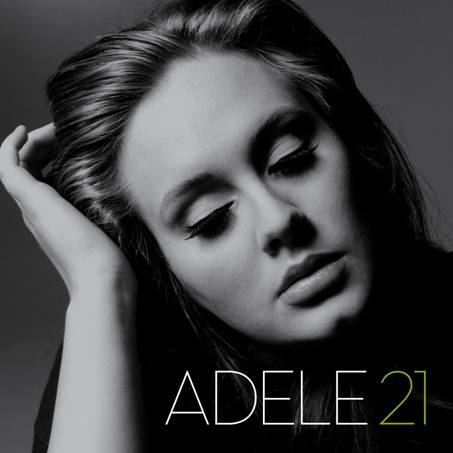
21 - Adele, 2011

I've been attempting to finish a post on the magnificent Janet Jackson's Rhythm Nation, 1814 for the past couple weeks, but can't seem to.  I'm sure a large part of the delay is the fact that I'm awaiting a vinyl copy to come in the mail, and want to have listened to it once before finally publishing anything.  That's what you have to look forward to.  In the mean time, I've been going through a bit of a music funk.  I'm tired of almost everything I've heard before, but can't seem to find the energy to listen to anything new.

The one exception has been Adele's second album, 21.  Yes, it's titled from the age at which she wrote the material, and yes, that throws me off every time considering the emotional depth and maturity that echoes through most of the tracks.  I have to admit, this album is growing on me with every listen.  As a follow up to 19 I immediately found it disappointing.  Don't get me wrong, I fell in love with "Rolling in the Deep" like everyone else, and was playing and re-posting her performance at the Brit Awards of "Someone Like You" along with the half of facebook.  But after my first listen, I felt that the rest of the album couldn't live up to these two power songs.

I still think they are the strongest on the album along with "Rumour Has It".  Yet at some point I gave the rest of 21 another chance, and this time I imagined that it was a backwards sandwich - the goods at either end with mostly boring essentials in the middle.  Eventually it morphed into a Lasagna, where the cheese is still on top, and most of the good juices drip to the bottom, but really, it's all good.  Something tells me I'm hungry...

As I mentioned, 21 begins with a bang.  The album is an exploration of a particular breakup, but instead of opening with melancholy, Adele comes out swinging.  There is indeed a fire in her heart, and it's contagious.  I guess the first two songs represent the anger stage of the grief cycle.  That's my favorite.

"Turning Tables" jumps back in time to the moment she realizes a breakup is necessary, and although it's a good song, it has an annoying tendency to get Rihanna's "Unfaithful" in my head.  I'm no Rihanna-hater, but this is really one of her worst.  Still, I shouldn't take out my feelings on Adele; it's not her fault that Rihanna wrote a catchy tune that talks about being a murderer.

The one song I haven't changed my mind on is the next: "Don't You Remember".  Adele, you are so much better than a shmultzy country song.  I know every breakup album needs a depression-infused-regret song, but this can not be it.  I honestly think I would have enjoyed this album much earlier if this wasn't included.

And now that we're past it, I can relax.  It gets better from here; it's a steady increase of good tuneage.  "Set Fire to the Rain" is quickly becoming the spicy meat in my Adele sandwich... or lasagna.  It's the ideal Adele instrumentation that starts with piano at the foundation and builds through the verses to create a climax at the chorus with strings and an epic feeling chord progression.

I love the punctuated piano shots of "He Won't Go", and I do tend to sing along, so perhaps it'll still grow on me, but right now I'm mostly excited for the ballads to start.  "Take It All" feeds that craving.  Pure, soulful Adele-voice, with the tiniest dab of gospel choir.  I kind of wish she saved this one until later, because it's hard to go back to the poppy "I'll Be Waiting".

Something about "One and Only" sounds like it should be in Dream Girls (Am I alone in this?).  Maybe that's why I feel like it doesn't hit as hard as it might be trying to.  I do LOVE the bridge, where she gives him a little understanding:  "I know it ain't easy, giving up your heart."  Almost wish it was a song in itself.  Then Adele does something I never would have expected.  She covers the Cure's "Lovesong".  I really like this a lot by itself, but I'm still not sure how it goes with everything else.  Are we meant to hear that she's ready to love again, is it denial, or does she actually feel like she'll love the D-bag forever?  I'm a little confused.

I forgive and forget everything that came before as soon as the arpeggios of "Someone Like You" begin.  This son makes me melt all over, no matter where I am; I become that dork on the bus with the iPod who closes her eyes super dramatically, and worries everyone around that she might burst into tears, and no one will know what to do.  But hey, you try to listen to this tragic tune without controlling your emotional reactions.

Here's that post I love to share.  I have to go cry now, and no, I don't have time to talk about whatever the bonus track is that came with my iTunes download. 

3.22.2011

Actor - St. Vincent, 2009

Recently, I made the mistake of trying to listen to St. Vincent's Actor at work.  I call it a mistake, partially because this album begs more attention than it gets as the soundtrack to my pink ukulele sales pitch, but also because I've become accustomed to listening to it on vinyl, in my living room, very loudly.  Background levels of volume at the music store hardly does it justice, and left me wanting, so I played it again on the bus over my headphones, and yet again when I got home on the record player where it was truly meant to be.

I have no qualms describing Actor as a work of art.  Themes and images run deep beneath thick textures boasting of driving rhythms and catchy-as-hell melodies and counter-melodies(whether sung or played on sax or violin, I can be heard whistling St. Vincent melodies daily).  As the title suggests, the album explores the line between fake and real, authenticity and invention, especially in the portrayal of personas and primarily in the likely setting of the suburban neighborhood.  Nearly every song is linked by foundational questions of how well we are really known by our lovers, friends and family, introduced right off the bat in "Strangers".  As I let these questions percolate, I can't help but wonder what part her stark headshot on the album cover plays, and indeed, even her use of pseudonym (her given name being Annie Clark).  How well do we know this woman who serenades us?  Who is she really?  How thick a line separates who we are from who we present ourselves to be?

When I break from philosophizing, I appreciate St. Vincent's sense of orchestration.  Like listening to Radiohead, you know know that every sound has been placed by a perfectionist - with utmost precision - so that even the most chaotic moments are fully controlled.  Also like Radiohead, St. Vincent loves to experiment with extreme clarity and distortion, yet somehow is never beyond accessible.  Strings, horns, and a rhythm section give Actor the epic feel of a movie soundtrack that is mostly rock and roll, but transforms itself when necessary to jazz or even Broadway-esque.  Her rhythms are intensely controlled, creating a contrast against her almost lazy vocals.  

One thing that I find so beautiful about listening to this on vinyl is that it seems intentionally divided into two acts, moving the final song on the CD, "The Sequel" to the end of Side A, allowing for the bouncy "Laughing with a Mouth of Blood" to be heard as a new beginning, and concluding the album with "Just the Same but Brand New", which I never even noticed before hearing it as the final track.

Although the songs of this album feel completely tied to one another, in an attempt to take angled digs at the same subject, I feel as though I respond to each one differently: During "Strangers", I'm philosophizing; "Save Me from What I Want" has me grooving with my shoulders while I drink my beer; "The Neighbors" gets me moody; "Actor out of Work" gives me an all-out desire to dance; "Black Rainbow" has me singing the lines of the violins and horns out-loud; "The Sequel" allows me to sink back into my head, before I'm brought back to reality when I flip to Side B and hear "Laughing with a Mouth of Blood"; I can't not rock out to "Marrow" before settling into my thinky-ness as "The Bed" brings me a sense of mystery in the world, though it doesn't make me want to actually lie down in bed like "The Party" ironically tends to; and finally "Just the Same but Brand New" pulls me full-circle to a nostalgic questioning of meaning in the world.  And I don't regret the experience for a minute.  Just writing this blog gives me such an impatience for this woman's next work of art.  But for now, let's watch this great video:


Peace out,
Dance

2.14.2011

ArchAndroid - Janelle Monae, 2010 (Part II)

I have trouble knowing exactly how to understand the two Suites found on The ArchAndroid.  What really throws me off is that the first Suite (Monae's album The Chase) and presumably her fouth/last Suite are albums to themselves.  Why has she put the middle two on one epic album?  Are they incomplete without each other, or was it simply practical?

Although the two Suites are distinct from one another separated by their overtures, the album is listened to in its entirety.  Never have I thought to myself, 'well, I think I'll just listen to the third suite of The ArchAndroid now'.  The album is divided, but it's still one album: If Monae really wanted separate listening experiences, she would have turned it into a double disc at least.


And so here we are where I left off: The third Suite's overture chiming in, interestingly enough not only foreshadowing the melodies to come, but also picking up on themes provided primarily by the final song of Suite II, "Mushrooms and Roses", further evidence that there is something more substantial linking these particular two Suites.

"Neon Valley Street" moves directly out of the Suite III Overture with a much smoother transition then that of Suite II.  It feels almost like a song meant to give you a bit of time to remember where and when you are in the performance, and settle into your seat for the second act.  "May the song reach your heart" beckons the listener back into the story, and by the time Janelle's robotic rap starts up I am hooked again.  The speaking outro could just as easily be the intro to "Make the Bus" which abruptly begins with Of Montreal's Kevin Barns voice which is totally creepy, and works super well with the whole science-fiction vibe.

In fantastic form, Monae proves that she can indie it up, and then move into "Wondaland", whose melody is reminiscent of the catchiest of an Earth Wind and Fire track.  I find myself humming it when I'm walking around work, or waiting for a bus on a regular basis.

The next two tracks are on the mellower side, "57821" (the number referring to Cyndi's droid number) points to her chosen-ness.  Sir Greendown is both her lover, and biggest believer in her being a Messianic figure, and it seems that this song suggests that even her droid number somehow prophecies that Cindi will indeed be the one to save Metropolis.  Musically, the song layers harmony with Monae and Deep Cotton, and reminds me of something that Fleet Foxes would do.  (Have I mentioned that her genre diversity literally blows my mind?)  "Say You'll Go" is haunting and beautiful, and comes across to me as a duet between Janelle and the piano.

Finally, "BaBopBye Ya" which transitions through a whole bunch of varied sections, and yet always makes me think of the James Bond movie songs that scroll during the opening/closing credits.  You know, like this:  It allows the album to end while still holding an intrigue and mystery as to what is to come with Suite IV.  I'm ready for it, Janelle Monae!

The ArchAndroid, though only the middle of a story, has a lot to say.  About love, freedom, race, and boundary crossing.  And it is definitely worth a listen.

10.15.2010

I Never Loved A Man the Way I Love You – Aretha Franklin, 1967


When I bought Tom Moon’s 1000 Recordings to Hear Before You Die, I made two lists: recordings that sounded interesting that I should check out at some point, and albums that I should actively pursue and pay money for, pronto.  I Never Loved A Man was in the second category.  I didn’t already own this record because I’ve always thought that Aretha was a hit-maker, but not necessarily an artful album-releaser, so I was surprised when Moon listed two of her albums, (along with Amazing Grace, which I’m still in search of for cheap on vinyl) instead of one really good collection that included all of her power ballads and historic gospel tracks. 

So anyway, this has been on my purchase-upon-sight-list for about half a year now, and I found it recently on a Sabbath Monday record shop stroll.  The album artwork is truly one of Aretha’s few beautiful covers, with the Queen of soul herself looking pensive and candid.  As Tom Moon directed, I remembered that this album historically propelled its heroine both into the mainstream, and onto a level shared with the fathers of soul, and listened to it as a beginning.  I pretended to have never heard neither the crisp and lively voice that was about to burst from the speakers, nor what has become The feminist anthem of our time.  I imagined that I knew ‘Respect’ only because Otis Redding recorded it first, and that the last time I heard strong feminine soul music it was through the vocal chords of Jazz’s triple-threat: Billie, Ella, and Sarah – powerful and deep, yes, but a different game entirely.  I placed myself in 1967 as best I could. 

And this record completely.  Blew.  Me.  Away.

She begins with ‘Respect’.  If that by itself doesn’t demand it, I don’t know what does.  She is bold and I can’t take my ears off her, because she means every word, every horn shot, and every pitch inflection.  She takes Otis’s ingenious-to-begin-with track, and gives it a whole new meaning as she represents the other half of the human population, bringing the song into the hearts of generations of people – men and women alike. 

And then, just when you think this woman has established her confidence and strength, she drops the saddest song in the world.  When anyone else sings ‘Drown In My Own Tears’, it’s nothing but melodrama, but I am pretty sure Aretha is channeling Billie Holiday, because I believe every word. 

The remainder of side-1 continues to dig deep into the emotional life of this mesmerizing woman of strength and beauty, while highlighting original tunes of herself and her fellow musicians (such as Soul Serenade which was written by T Sax player, King Curtis).  The title track makes it clear why she was launched onto the billboards, and is not nearly played enough compared to some of Aretha’s other huge singles. 

I never want to skip a single track on this record, but I do start to bounce a little in anticipation of flipping it over.  There is something about the second side of a record – and I say that especially in regards to this one.  Side-2 begins with the three most fun and groovy songs of the album, ‘Dr. Feelgood’, ‘Good Times’, and ‘Do Right Woman – Do Right Man’ (which connects gender-equality and right-relationship perfectly with head-nodding and chair-dancing), and then they are coupled with the desperate, sad, and yet hopeful ‘Save Me’, and Sam Cooke’s track that is strained with urgency: ‘A Change is Gonna Come’.  

I Never Loved A Man the Way I Love You is a true gospel album that speaks, no, sings of both the best and worst of life from the most honest place possible, and ends looking forward with ample faith and confidence.  I feel like I’ve laughed and cried, and am officially ready to start the day.  At 2:30 in the afternoon on a Friday.  

9.10.2010

Paul Simon: Graceland, 1986

I could take a year to write a blog post on such a great musical landmark as this.  Graceland.  I think I could research and analyze and compile enough material to write a small book (or at least a chapter) on the album's cultural, social and political significance/implications.  Because I have enough trouble keeping this updated as it is. 


So I have decided to try to keep this short, in order to primarily point you to spend a bit of time with this experiment-gone-oh-so-right.  And if you get a real tangible copy, Paul Simon has included plenty of interesting details about the instrumentation and composition about the pieces. 

There is something about this album, and hearing the married styles of American rock and roll with the people's music of South Africa... yes, there is something distinctly flavored about this record, but it doesn't leave the awkward after taste of forced fusion for the sake of concept.  It's SO much more than a concept.  It's a love story that transcends all prejudice.  It's Romeo and Juliet with a happy ending.  Paul Simon fell in love with the music of South Africa - it equally felt to him foreign and familiar - so he made an inspired album using local musicians and their traditions, crossing a metaphorical barrier into a country that was being culturally boycotted by America for anti-apartheid convictions.  However Simon, far from supporting apartheid, managed to expose a music that had been hidden from the world under a racist regime.

And when finally uncovered as a mash-up with Simon's own folky American rock-and-roll style, the overwhelming feeling this record communicates can only be described in one word: happy.

I am sure once someone described the music on this record like floating.  And it does float: it grooves along a slow canal under hot sun.  It bounces up and down and never loses the momentum.  Nothing can get me down, even as I unload my dishwasher and notice a layer of grit left on all the bowls.   I have probably already said too much, and I haven't said a thing about a single song.

Ok, well hold on tight through The Boy in the Bubble.  It always sounds a bit messy to me, and I have to be in the right mood for it, but I never regret letting it play out into the title track, Graceland, which still is not my favorite track, but sets the tone as a strong story of journey and pilgrimage to where "we all will be received".  And then we start to have fun.  I can do anything while I listen to I Know What I Know, as long as I can sing along, and Gumboots keeps me doing it.  Activity preferred.

Diamonds on the Soles of Her Shoes is the smoothest track, going down like a latte from Cafe Artigiano, and I do tend to pour myself something to drink at this point of the record to relax a little, just in time to turn it over for the superior side of the album.

If you don't have this on vinyl, I would encourage you to take a 30 second break before you start the second half, because I'm convinced it's supposed to be there.  You Can Call Me Al sounds like it's starting over somehow, and Under African Skies is maybe the most stereotypical nod to the motherland, but it's so perfect, and prepares us for the accapella Homeless that follows.

And what else can I say?  Three more songs (on the vinyl edition that I have) and they are all fantastic.  Crazy Love Vol II makes me passionate, That Was Your Mother makes me smirk (it's the one song I feel Paul Simon could have maybe left off), and All Around the World or the Myth of Fingerprints makes me want to dance, and leaves us feeling hopeful for the world.

Hopeful.  An album made in the thick of Apartheid debates in traditional South African styles that remains full of hope is nothing short of a Paul Simon miracle.  Maybe he should be made a saint.  If he can ever successfully reunite with Garfunkle, he just might.

1.03.2010

#1 Album of 00's: Radiohead's In Rainbows, 2007


Better late than never, right? The thing is, I didn’t pre-consider the fact that I might want to spend more significant time on albums that most shaped my personal experience of the Ohsies. So I’m sorry that I didn’t stick with the 12 day plan, but here I am at the number one album as promised, and even before the distraction of the first New Music Tuesday of 2010.

I tried my darndest to keep it to one album per artist, I really did. But once I started compiling my list by considering possible number one albums, it was clear that both Kid A and In Rainbows were not simply contenders for the top 12, but for the number one spot. Just be grateful that I didn’t give in and add Thom Yorke’s Eraser to the list as well!

Luckily for me, the two Radiohead albums listed are not simply two really amazing albums, but they’re also incredibly distinct. Two albums couldn’t have more of an opposite effect on me: While Kid A seems to demand my intellect in full attention, In Rainbows has a more flexible feel, appropriate for nearly any excuse to put music on. The interplay between melody and rhythm plays like a good jazz record, and I rarely stop to listen or look up lyrics (though uncharacteristically, Radiohead does supply lyrics in the liner notes). On top of it, when we do stop to listen to what’s being sung, the lyrics represent the most personal stuff Radiohead has ever released!

The closest track we get to an electronic Kid A sound is the first song, yet it’s instantly clear that we are experiencing Radiohead as a full out rock band. (Perhaps Yorke realized he can play with electronics satisfactorily on his solo projects?) And no, this is not simply an experience of a band returning to an earlier formula, since In Rainbows sounds just as dissimilar from The Bends as any other album. What we have here is a brand new band; one who has continued to grow and is finally ready to play with everything that they have learned and discovered over decades of music-making; a band that is willing to make use of all of its members to their greatest potential. Not only that, but they’re willing to let the public decide what their music is worth, releasing a downloadable version first for your choice of a donated amount. Whatever you paid, it’s worth at least twice as much.

15 Steps feels like a punch in the face, but in a good way. Though the album can be listened to in nearly every context there is one very important consistent: some part of my body will be punching out the beat, which by the way, is the most natural feeling 5/4 since Brubeck and Desmond’s Take Five. This symptom of foot tapping/head nodding continues into Bodysnatchers, creating the greatest pair of momentum builder tunes for doing nearly any productive thing. Bodysnatchers is full of speed and sound and distortion, with clean guitar strings settling in overtop the rhythm and lyrics, but as it prepares to come to a close, it does the opposite of expected and drops a wicked guitar solo.

Then with Nude comes another change of pace, but doesn’t shock the system. Instead it melts my insides thoroughly as the string quartet seems to dialogue with Thom’s passionate vocals on the intertwined topics of desire and disappointment. I think this is the first time I’ve thought of a Radiohead song as sexy. And as Thom’s voice rises to the conclusion that leaves me hanging a little, the mood carries itself through Weird Fishes/Arpeggi. Who would have thought “sexy” could be associated with a song called Weird Fishes? But the guitar riff seems to effortlessly roll over the straight drumbeat that pauses only briefly about 3 minutes in, as if stopping to make sure we’re headed in the right direction. Turns out we are, as the song remains mostly instrumental till the end. So stunningly beautiful.

All I Need introduces Radiohead’s first romantic ballad, not without its dark undertones created by fuzzy droning synthesizer, cello, and lyrics that hint at loneliness and even obsession. As creepy as this groove is, the message seems to be a love that runs deep and unconditionally... then again, that kind of committed love can be pretty terrifying...

Faust Arp and Reckoner have most often been the strongest competition to be my favorite track on the record. Faust Arp feels intensly cyclical though it throws a 9/8 measure in every few bars, giving a sense of loosing control, though we hop right back on the familiar rotation soon enough. Still doing things brutally uncommon in the pop/rock genre, Radiohead does the experimental gently, as though holding your hand through the unexpected.

Reckoner begins with an atmosphere that seems as though I’m approaching the song rather than the other way around. Philip Selway’s snare and cymbals sound echoey and loud as if in a cement tunnel, and the soft electric guitar builds its volume at tiny increments. I feel as though I’ve stumbled across the best-kept secret of the decade, and the only thing there is to do is groove out.  

Ever since finally seeing this band live, House of Cards is tied to my memory of their first encore at Thunderbird Stadium. As I sit in the living room, sipping on my rum and coke float, I think to myself that if it were raining right now, I would be moved enough to go out in my headphones and attempt to recreate that outdoor concert experience. Yorke’s voice on the track is even reverb-ed, creating just the stadium effect I need for my nostalgia.

Jigsaw Puzzle Falling Into Place recalls some of the album’s earlier energy, and portrays the story well as two people connect as if puzzle pieces that fit together. I can’t help but think that the way Radiohead is rocking out as an expression of the same chemistry.

In Rainbows closes with the spine-tingling, minimalist Videotape. Three piano chords cycle incessantly as the drum beat is slowly offset, creating a reflective tone as Yorke sings of looking back on a life nearing the end of it. A reference to Mephistopheles not so subtly recalls the Faust theme of the first half of the album, inviting us to examine our own life through the frame the music provides.

At the moment I feel so in love with In Rainbows that I cannot even articulate what it is that sets it apart so. There is an atmosphere to it that goes beyond a soundtrack quality, but settles into my emotional core and finds meaning in whatever happens to be at the center of my attention at the time. Every song finds a certain perfection that allows itself to be played in nearly any circumstance, and yet also welcomes analysis and questions. It’s the most colourful Radiohead we’ve heard yet.

-------------------------------------------------------

So there you have it. My twelve favorite albums of the Ohsies are now recorded and heard, and I’m ready for a new decade of music. For those curious and disappointed, here is a list of the albums that had reoccurring guest spots in Listmas drafts. Likely I will blog them one day, but at the moment am looking forward to returning to some older music. We shall see. Happy Listmas to you all!

In Chronological Order:

Eminem: The Marshall Mathers LP, 2000
Jack Johnson: Brushfire Fairytales, 2000
Erykah Badu: Mama's Gun, 2000
India Arie: Acoustic Soul, 2001
Broken Social Scene: You Forgot It In People, 2002
Damien Rice: O, 2003
Postal Service: Give Up, 2003
Death Cab for Cutie: Transatlanticism, 2003
U2: How to Dismantle and Atomic Bomb, 2004
KD Lang: Hymns of the 49th Parallel, 2004
Imogen Heap: Speak for Yourself, 2005
Regina Spektor: Begin to Hope, 2006
Handsome Furs: Plague Park, 2007
Yael Naim: Yael Naim, 2007
Coldplay: Viva La Vida, 2008
Animal Collective: Merry Weather Post Pavillion, 2009
K-Os: Yes, 2009

So, what were your favorite albums of the Ohsies?  What'd I miss?

Peace out,

Danice

1.02.2010

#2) The Arcade Fire: Funeral, 2004

When Arcade Fire’s Funeral is mentioned, I must admit, what comes to mind first is not always the music. I think of the thin cardboard disc jacket that often becomes hidden among my other CDs, and the single sheet bulletin style liner notes which in a short band bio notes, “the irony of their first full length recording bearing a name with such closure.” Ironic indeed. For as the tracks explore mortality and loss, they never gets bogged down with grief, but push ahead full of drive and… well, life!

Leaving my iTunes minimized, I pop Funeral into the ghetto-blaster that acts primarily as an alarm clock on my bedside table as I attempt to clean up my pig sty of a room before my roommate gets home. Christmas presents must find spaces, clothes must be washed, and papers must be sorted: welcome to the new year! I’m finding myself spending a lot more time with the lyrics than with all I need to put away though.

The album begins with 4 tracks with the same name: Neighborhood #1, 2, 3, and 4, with a short intermission between #2 (Laika) and #3 (Power Out), called Une annee sans Lumiere (Sorry, but I have no clue how to add French accents in here). #1 (Tunnels) paints a childhood dream in vivid picture of a town completely snowed in (did I mention these guys are from Montreal?). The two love-struck kids dig tunnels to meet in town alone, and find themselves in their own world, forgetting what life was like before.

The neighborhood tracks beckon us into a coming-of-age story, as we discover what we are to become only in light of reflecting on all that we’ve lost. #2 subtitled Laika refers to the first dog sent into space without intention to bring him back as a metaphor for the black sheep of the family. I love the relational dimensions brought into this song though, sung from the point of view of a sibling, we picture the fights with a parent, and even the way neighbors can revel in a good story to tell, regardless of the pain it causes. It’s sung with a lot of tongue in cheek goodness.

Thus begins the year without light. Une Annee Sans Lumiere breaks from the cycle of neighborhood pictures to find a moment to grieve and reflect, but only a moment. Upon closer investigation (looking up a translation), the song is really a joining of the songs on either side of it. Une Annee combines metaphors of family struggle (the father wears blinders like a horse) with a dark world that’s lost it’s power (“hey! The streetlights all burnt out”). In preparation for Neighborhood #3 (Power Out), Une Annee speeds up with tambourine and shouts of “Hey!” that make me want to start running all the way into the next track. Power Out continues to describe the town searching for light, and extends the metaphor to a final frustrated thought and plea: “and the power’s out in the heart of man, take it from your heart put it in your hand.”

Neighborhood #4 (7 Kettles) uses actual kettle whistles above the repeated string patterns in between verses. It drives me a little crazy, but creates a mysterious effect as Butler continues to reflect on the relationship between birth and death in lines like, “Time keeps creepin’ through the neighborhood, killing old folks, wakin’ up babies just like we knew it would,” and “they say a watched pot won’t ever boil… just like a seed down in the soil you gotta give it time.”

Crown of Love seems to be the center of this album, while all the other songs run at full pace this one is a simple apology: “if you still want me, please forgive me, the crown of love is not upon me,” showing of Butler’s ability to embody great passion. In the final minute, the track’s string driven 6/8 feel breaks into 4/4 and I break out dancing for the last minute of the song. My only disappointment on the entire album is that it fades out instead of developing the energy yet again, and expanding the song to 6 minutes.

But I forget all disappointment as soon as Wake Up strikes up and calls everyone to sing along to the syllable of “oh” like a good U2 chorus. In this song we return to the theme of growing older, and although the song begins heavily, they cleverly transition into dance beat that seems to face death without fear, affirmed by Butler shouting, “you better look out below!”

Hanging up clothes as Haiti plays, I can’t help but think the repeated counter melody sounds like a steel drum melody, though it tends to be played be flute and voices. Suspended electronic sounds remain while nothing else does, and the anticipated Rebellion (Lies) beat enters right on top with energy-contagious kick drum and bouncing double bass combo. I don’t want to close my eyes, because it’s simply not safe when you’re jumping around the room.

Finally Funeral comes to a close with female vocalist Regine Chassagne, who sings with a haunting Bjork quality. Until now she’s only headed up “oohs” or accented words or lines sung primarily by Win Butler, and I wonder if she was held back earlier in the album in order to create the surprise that In the Backseat brings. Swinging between two feels of either thin arch-shaped piano lines, and a heavy rock underscored by bowed bass, the instrumentation seems to hint at the song’s theme of moving between childhood and responsibility: “My family tree’s loosing all it’s leaves, crashing towards the driver’s seat”. At the end of Funeral, this is one of the few songs that appropriately fades into silence, and I’m left with nothing to do other than push play again.

1.01.2010

#3) Sufjan Stevens: Come On! Feel the Illinoise!, 2005

I have to at least wonder how my experience of Come on! Feel the Illinoise! would change if I had ever stepped foot into the state of Illinois. As Sufjan’s second installment of albums inspired by/dedicated to each of America’s 50 states (which is a project he’ll doubtfully complete), he references many specific locations, personalities, and events particularly relevant to Illinois, such as Chicago, Decator, Jacksonville, serial killer John Wayne Gacy Jr., Superman (he’s from Metropolis, duh!), and those are just examples taken from the song titles. Not to mention, those are just ones that I actually recognize.

But I don’t find the album’s American prairie setting excludes me completely as a west coast Canadian, because ultimately the album’s true concept is a collection of short stories of human life meshed with Stevens’ touching personal reflections. Just as a good movie can do, specific setting is used to create a fairly universal story. And story is one of the many things Illinoise does incredibly well; it is folk music at its absolute highest caliber.

Although it is somewhat ambiguous from the first two tracks, Illinoise quickly shows itself to be the happiest sound on my list, and arguably the entire decade! Even tackling heavy subjects of war and murder, there is a lightness in the exquisitely eclectic instrumentation, and a sense of humor that comes with ridiculously long song titles. (For the purpose of time and space, I’ll use abbreviated names unless absolutely necessary).

And so we are introduced to Illinois/Illinoise with reflective piano not constrained by any time signature used in pop music prior (65/16. And no, I don’t want to admit how long I spent on that), preparing us for a collection of songs that refuse to fit into any box. Flutes trill above the texture freely, until they go crazy in The Black Hawk War, a march complete with snare shots doubled by trumpets.

Both tracks to me feel like a slow approach to the listener, before full out inviting us to indeed “Feel the Illinoise” with the title track, which is broken into two parts: The World’s Columbian Exposition, and Carl Sandburg Visits Me in a Dream equally portray some of the most joyful energy, even as both parts question the meaning of progress in light of the world fair and transitioning to a more personal inquisition inspired by the poet Carl Sandburg: “Are you writing from the heart?”

While this album creates an atmosphere easy to play in any background, it can additionally be appreciated musically and lyrically for hours. For months I didn’t pay attention to what John Wayne Gacy Jr. was about, and when a friend pointed out that he was a famous serial killer I was eager to listen to the lyrics more closely. Sufjan has a way of empathizing with both victim and victimizer, turning the final line into an introspection: “and in my best behavior, I am really just like him, look beneath the floorboard for the secrets I have hid”.

Jacksonville through Decatur (the first song I know of positively dedicated to step-mothers!) have a great southern banjo flavor that is only briefly interrupted by A Short Reprise of strings (which tie the entire album together, without sounding too formal) that flow straight into the best-known and loved track on the album, Chicago. Oh how I need to go to Chicago. In the past, I’ve mostly wanted to go so I could have my picture taken with the bronze Michael Jordan outside of the United Center. I still want to do that, but now I just want to duplicate an experience of a van road tripping and sleeping in parking lots like described in this song.

More sensitive story telling with Casmir Pulaski Day, showing what has been consistently true of Illinoise; Sufjan’s beautiful sense of both melody and harmony. Having a brief instrumental break before The Man of Metropolis jars us back into interest with a few beats of an electric guitar that doesn’t find its way back into the track for a full two minutes. The variety in instrumentation is noted yet again, as The Prairie Fires return to a Sufjan-favoured combination of oboes and muted trumpets that finds itself displayed in all of its glory throughout the Predatory Wasp as well. And for the sake of trivia and awe, Sufjan himself plays nearly every instrument in the recording of this album.

As Sufjan continues to sing his simple and deeply honest lyrics, it occurs to me that there is something about his voice that doesn’t quite fit in with the other artists on my top 12. Thus far it has seemed that one of the most consistent themes of Listmas has been men making use of their falsetto range. Think about it: Falsetto is practically a trademark for Justin Timberlake, Thom Yorke, Chris Martin, and Jonsi Birgusson. Yet Sufjan’s voice is under-produced, softly calling us to pay attention to his insights. Not that he never hits a high note, but there really is something quite noteworthy how unremarkable his voice really is. Yet we love him for it, and the way it seems to welcome us all to sing along with him.

This album also plays rather like a movie. It’s certainly long enough to be a feature film, and as we near the end, tracks like Night Zombies and The Seer’s Tower turn dark, seemingly more at home on the earlier album Seven Swans, which is a musical interpretation of the Biblical Revelation. The ghostly part of the album doesn’t last long however, and we return to another 2 part-ed song full of energy and joy as though we really haven’t departed to far from the title track. Even the transitions between the two parts finds itself made up primarily of falling trumpet lines, while Illinoise transitioned by rising ones.

In noticing similarities between Illinoise and The Tallest Man, I begin to wonder if the whole record is set up in a chiastic structure, since they match also as the third and third from last song on the album. This would make The Man of Metropolis Steals our Hearts the most important track through which to hear the rest of the songs. Interesting, but I’ll have to leave that analysis for another day, and instead try to remember whether Sufjan Stevens was in my Orchestration class as we also had to write an exercise of riffs using a single note. Either way, he cheats a bit.

And so beautifully, Out of Egypt concludes the experience in a wonderfully Steve Reich influenced instrumental repetition that fluctuates slowly and covertly. It allows me to put the whole experience down for a while and reflect before I decide to pick this album up again. Sounds take their turns emerging and re-submerging into the texture as all that makes up Illinoise seems to be waving wide-eyed goodbyes.

In a decade of emo and self-pity, Sufjan asks his questions of meaning not with naivety, but with refreshing hopefulness. Easily one of my favorite things created this decade, and absolutely my favorite new creative genius from these past 10 years.