8.24.2011

The Video Stars: Top 10 Comedies

Time for my second installment of music videos.  Here's my choices for the top 10 comedy music video.  Enjoy!

10.  I Feel Better - Hot Chip, 2010.  Directed by Peter Serafinowicz.

At first you just think it's a great boy-band-parody video, and then a bizarre thing happens.  I nearly peed myself when I first saw this one.

9.  All the Small things - Blink 182, 1999.  Directed by Marcos Siega

Probably more the parody vid you were expecting.  Makes fun of nearly every bubblegum pop video that was out in the 90's, and does so in true Blink 182 style.  Now when I see an old Backstreet Boys video, I think of this.  Classic. 


8.  Bien o Mal (Right or Wrong) - Julieta Venegas, 2010.  Directed by Agustin Alberdi.

So, I can't understand any of the lyrics, which may actually be part of the charm of Bien o Mal.  I find it adorable, lovely, and terribly giggle-worthy.  Even better, it's meant to be a feminist critique of who decides what is "lady-like".  I am totally for this parallel universe, especially if I get to fart butterflies too!
7.  I'm On a Boat - The Lonely Island featuring T. Pain, 2009.  Directed by Akiva Schaffer.

The Lonely Island have now made a bunch of videos to choose from, but this one stands out for not only its humor, but production.  It looks like the kind of rap videos it's making fun of, and got so much acclaim that  it was even nominated for a grammy!  Most importantly, I don't think I've since been on any kind of boat without this song being referenced at least once.  Granted, I am usually doing the referencing...

6.  Frontier Psychiatry - The Avalanches, 2002.  Directed by Tom Kuntz & Mike Maguire.

This is possibly the most random music video I've ever seen, and yet it ideally suits the song (which is composed of samples from 37 different spoken tracks).  Plus, there is just something so awesome about an old woman playing the drums.  


5.  Learn to Fly - Foo Fighters, 2001.  Directed by Jesse Peretz.

I've been noticing that I especially love videos where someone in the band is duplicated.  This is an extreme example, and I absolutely love it.  Especially when Dave Grohl asks Dave Grohl for his autograph.  For fun, try to figure out which characters are all played by which band members.  Also, see if you can recognize the song that's played muzak-style at the beginning. 

4.  Weapon of Choice - Fatboy Slim, 2001.  Directed by Spike Jonze.

What a beautiful marriage between band, director, and actor.  There is possibly no other actor that could have created the same effect that Christopher Walken does here; he has no deadpan/dance equal.  The comedy of this video relies entirely on his creepiness, and there was never any doubt it would succeed.


3.  Land of Confusion - Genesis, 1987.  Directed by John Lloyd & Jim Yukich

So many puppets, so much happiness.  Especially when the puppets represent Ronald and Nancy Reagan, a few other presidents and a whole host of celebrities.  The only video from the 80's in this particular list, and isn't it appropriate that it features puppets?  What was with the 80's and puppets anyway?

2.  Praise You - Fatboy Slim, 1999.  Directed by Spike Jonze.

So great.  Yes, it looks like someone caught a flash mob on their camera phone, and that's the point.  The choreography is wonderfully goofy, the crowd's reactions are 100% genuine, and this likely goes down in history as the cheapest music video to ever be shown on MTV.  Also, whenever this song gets played at a party, guess what happens. 


1.  It's Oh So Quiet - Bjork, 1995.  Directed by Spike Jonze. 

I won't pretend like this was an easy choice; at some point I considered nearly all of the top 5 videos for the number 1 position.  Yet, it does seem appropriate that Spike Jonze is involved considering his name is on so many videos I would consider hilarious or clever.  You should probably go right now and watch his entire videography if you haven't already.   

But in the end, Bjork's emotional ode to falling in love stands out.  There are two thoughts that simultaneously enter my head when I watch this entertaining video: 1. Where did they come up with these ideas?  I could never have this kind of imaginitive creativity!  and 2.  This video is exactly what the song needs - no other video could have possibly existed!  It captures Bjork's quirkiness, and her shifts between mellow and exstatic, with such fluidity considering they're terribly abrupt.  Genius.  Also, I totally have "dance with a mailbox" on my bucketlist thanks to this.  Totes. 

8.22.2011

The Video Stars: Top 10 Dramas

I've decided to take a short break from albums to make a few top ten lists.  This week I have been on a major music video kick, and as a result I have discovered a whole new respect for the medium.  Just like physical albums allow us as listeners to tangibly and contextually connect with the music, videos allow us to experience a song in new, visual way.

There are those skeptics who would see music videos nothing more than advertisements, and I can see some truth in that: videos can massively effect the reception of a song or an album in the mainstream, so I'm sure many are made for purely promotional purposes.  But as I have been watching and picking videos for top 10 lists, I've been convinced of music video as a whole artistic category on its own.   


I have grouped the videos based on what genre the video best fits into, and have one self-appointed rule that no video can be in two lists (even if they clearly fit into several).  Let's begin with my top 10 dramatic music videos.  These videos all have an uncanny ability to tell a story.

 10.  Mr. Brightside - The Killers, 2004.  Directed by Brad and Brian Palmer.

This song tells a great story all on its own, but with some incredible costumes, great acting, a magical setting, and references to one of my all time favorite movies (Moulin Rouge), the jealousy Brandon Flowers sings about comes to life. 

9.  This is Hardcore - Pulp, 1998.  Directed by Doug Nichol.

Three stories are interwoven, all using old film imagery to remind us that it is all hollywood pretend - a fitting mask for a song about a destructive lifestyle.  Creative and beautiful exploration of the song without taking a literal approach, but I kept it in the drama category because it holds intrigue, and asks us to look for the story behind the stories. 


8.  Like a Prayer - Madonna, 1989.  Directed by Mary Lambert.

Better known for its controversy with the Catholic Church and Pepsi, Like a Prayer actually tells a captivating story about a black man wrongfully accused of rape while still capturing the themes of spiritual and sexual ecstasy in the song.  Many videos would go on to push the envelope in order to gain popularity through controversy, but few would do it as well as Madonna. 

7.  November Rain - Guns n' Roses, 1992.  Directed by Andy Morahan.

An epic video for an epic song.  And it has become so Iconic.  And coolest setting for a guitar solo of all time.  The story for the video is based on Del James' short story "Without You", which gives a bit more context for the bride's death, but it seems GNR have decided to go for mystery here.  I think it works.

6.  Nothing Compares 2 U - Sinead O'Conner, 1990.  Directed by John Maybury.

Pretty much the opposite of November Rain, Sinead O'Conner gives us one of the most vulnerable moments in music video history: her unavoidable face.  The story doesn't need to be spelled out because our interest is in the emotions of this character, and we can't look away.  In the same vane, check out Janelle Monae's "Cold War". 

5.  Rabbit in Your Headlights - UNKLE feat. Thom Yorke, 1998.  Directed by Jonathan Glazer.

Eerie and intriguing, this videa was hard for me to watch at first and now I can't stop.  Is this a simple story about a man with mental illness, or is it a parable about the way society tackles its problems?  Either way, Rabbit in Your Headlights is thought provoking and unexpectedly beautiful. 

4.  Vidrar Vel Til Loftarasa - Sigur Ros, 2001.  Directed by Arni & Kinski.

The slow motion adds to the drama and beauty - very few directors hold a cinematographic candle to Icelandic duo Arni and Kinski - while telling a story so important, and yet barely before tackeled through music video.  I especially love the faces of the crowd at the football match.


3.  The Scientist - Coldplay, 2001.  Directed by Jamie Thraves.

Others have down the backwards thing, but none have done so in such a narrative focused and appropriate way, allowing us to nearly forget the novelty of it.  And I'm sure no one has done as convincing a job at singing in reverse action as Martin does here - mind you, it took him a whole month to learn to do it.  Oh yeah, and I think this is the only backwards video to not use the water effect.  An accomplishment in its own right.

2.  Just - Radiohead, 1995.  Directed by Jamie Thraves.

The best stories keep you guessing, even after you've heard them.  This is one of those.  Also, the best use (and non-use) of subtitles ever. 


1.  Hurt - Johnny Cash, 2002.  Directed by Mark Romanek. 

Everytime I watched this video it climbed higher up the list until I simply couldn't deny it the number 1 spot.  First of all, this is one of the best covers of all time.  "Hurt" is given all the more meaning when sung by someone who has lived as much life as Johnny Cash has.  And the line "my empire of dirt" is given a new context from a superstar in his 70's.

The video is fairly simple autobiography, with Romanek piecing old footage together, and yet he does so carefully and musically.  Cash allows himself to be vulnerable so near the end of his life, giving this video a haunting sense of eulogy or epitaph.  A fantastic last word from a complicated and beautiful man that gets better and better every time you watch it.  Really. 


7.25.2011

Janet Jackson's Rhythm Nation 1814, 1989


If I were writing a top ten list of albums that shaped me as a kid, I might as well start by putting this record on top.  So forgive me if I wax nostalgic.  No matter what song is played from this album, my first mental image is of being in my older brother's basement room, using his double bed as a stage and a deoderant bottle as a microphone, trying my darndest to be Janet.  Before spending countless hours in front of the tv, trying to memorize her brother's "Thriller" dance, I was taking lessons from Rhythm Nation 1814.

I won't attempt to talk about this album with mentioning the videos associated with it because very few of us who have ever seen this, can listen to "Rhythm Nation" without being transported to the stark setting of the streets or the sparse warehouse where militant dancers are being trained to transform the world.  Janet has a long resume of impressive music videos with high production quality (and costs), however what I love about the videos connected with Rhythm Nation is that they are all very simple ideas and settings allowing the focus to remain on choreography and narrative.

As soon as the bell tolls, opening the album, I am there - one of Janet's army - and to be honest, I've never counted myself out of this number since first hearing this record.

The first three tracks set the foundational concern towards social injustice, calling for a new formation of people along the same line as George Clinton's One Nation Under a Groove.  Here, Janet reminds us that there is still a place for the protest/socially conscious song in R&B that was established in the 60's and 70's by Marvin Gaye, Stevie Wonder, ect, but had been missing for nearly a decade.  Janet is young here, but with the New Jack Swing fathers, Jimmy Jam and Terry Lewis she is able to deliver a call to justice and equality that packs a punch, and keeps us dancing.

After reminding us of the "State of the World", and delivering her thesis that only "The Knowledge" can conquer the likes of prejudice, ignorance, bigotry and illiteracy, she moves the album along with:
"Get the point?  Good.  Let's dance..." and continues to encourage movement with two power dance tracks, "Miss You Much", and "Love Will Never Do (Without You)".  For someone with such a light wispy voice, she sure knows how to energize her listeners.  Still, she never let's us get too far away from the issues at hand, reminding us to think of the children in "Livin' In a World (They Didn't Make)".

I recently bought this on vinyl, and "Living in a World..." appropriatly concludes the chapter that is side A.  When I turn it over I'm thrust back into the action with the brilliant anthem, "Alright".  This song could alone define New Jack Swing with its street class swagger, and marriage of R&B melodies with heavy hip hop beats.  Not to mention it boasts one of my favorite music videos of the time.  I'm going to go ahead and imbed this one...


Together with "Escapade" these two tracks offer two attempts to hide from the harsh reality, the first with imagination and friendship, the second with flight.  "Black Cat" instead faces the danger of the streets as a warning to her lover.  Written by Janet herself, I'm not always sure how the harder rock-inspired track fits into this dance record, but it's an example of decent songwriting that sounds eerily like Michael. 

There is a very small part of me that wishes the album ended here.  However, the last three tracks prepare us all for Janet's sexual revolution that is to come.  We can't say she didn't warn us.  I read a review somewhere that said "Lonely" is the sexiest song about not getting any that ever existed.  That's probably true, at least as of 1989.  As in any new nation, love is never left out of the equation entirely.   Still, when she takes it all the way to the anticipatory "Someday is Tonight", I just feel dirty.  For some reason, this song is so much worse than her way more explicit stuff that comes in the 90's.  I don't know why, maybe her age, or how it fits on Rhythm Nation...  but however I might justify it, this is my favorite track to skip for sheer awkwardness. 

A brief Interlude followed by the same bell tolls that open the album asks us not to allow our eyes to deceive us, since it is only our "knowledge and wisdom that separate us".  If I were to critique her philosophy here, I might say we need more than darkness to be blind to our differences, but brighter light to see how deeply we are the same.  But that's not what I'm here to do.  The real point is that this unlikely young Jackson does exactly what she sets out to do: inspire us to dance in the darkness and invite everyone to join in, regardless of race or status.

5.07.2011

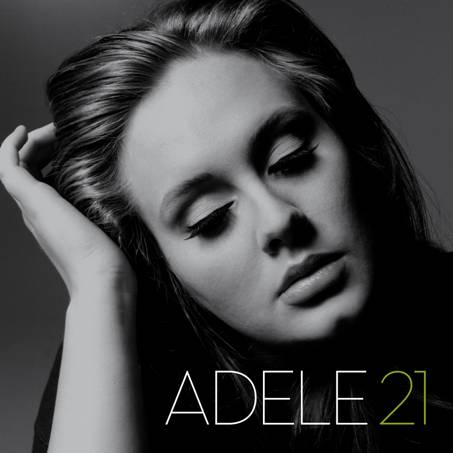
21 - Adele, 2011

I've been attempting to finish a post on the magnificent Janet Jackson's Rhythm Nation, 1814 for the past couple weeks, but can't seem to.  I'm sure a large part of the delay is the fact that I'm awaiting a vinyl copy to come in the mail, and want to have listened to it once before finally publishing anything.  That's what you have to look forward to.  In the mean time, I've been going through a bit of a music funk.  I'm tired of almost everything I've heard before, but can't seem to find the energy to listen to anything new.

The one exception has been Adele's second album, 21.  Yes, it's titled from the age at which she wrote the material, and yes, that throws me off every time considering the emotional depth and maturity that echoes through most of the tracks.  I have to admit, this album is growing on me with every listen.  As a follow up to 19 I immediately found it disappointing.  Don't get me wrong, I fell in love with "Rolling in the Deep" like everyone else, and was playing and re-posting her performance at the Brit Awards of "Someone Like You" along with the half of facebook.  But after my first listen, I felt that the rest of the album couldn't live up to these two power songs.

I still think they are the strongest on the album along with "Rumour Has It".  Yet at some point I gave the rest of 21 another chance, and this time I imagined that it was a backwards sandwich - the goods at either end with mostly boring essentials in the middle.  Eventually it morphed into a Lasagna, where the cheese is still on top, and most of the good juices drip to the bottom, but really, it's all good.  Something tells me I'm hungry...

As I mentioned, 21 begins with a bang.  The album is an exploration of a particular breakup, but instead of opening with melancholy, Adele comes out swinging.  There is indeed a fire in her heart, and it's contagious.  I guess the first two songs represent the anger stage of the grief cycle.  That's my favorite.

"Turning Tables" jumps back in time to the moment she realizes a breakup is necessary, and although it's a good song, it has an annoying tendency to get Rihanna's "Unfaithful" in my head.  I'm no Rihanna-hater, but this is really one of her worst.  Still, I shouldn't take out my feelings on Adele; it's not her fault that Rihanna wrote a catchy tune that talks about being a murderer.

The one song I haven't changed my mind on is the next: "Don't You Remember".  Adele, you are so much better than a shmultzy country song.  I know every breakup album needs a depression-infused-regret song, but this can not be it.  I honestly think I would have enjoyed this album much earlier if this wasn't included.

And now that we're past it, I can relax.  It gets better from here; it's a steady increase of good tuneage.  "Set Fire to the Rain" is quickly becoming the spicy meat in my Adele sandwich... or lasagna.  It's the ideal Adele instrumentation that starts with piano at the foundation and builds through the verses to create a climax at the chorus with strings and an epic feeling chord progression.

I love the punctuated piano shots of "He Won't Go", and I do tend to sing along, so perhaps it'll still grow on me, but right now I'm mostly excited for the ballads to start.  "Take It All" feeds that craving.  Pure, soulful Adele-voice, with the tiniest dab of gospel choir.  I kind of wish she saved this one until later, because it's hard to go back to the poppy "I'll Be Waiting".

Something about "One and Only" sounds like it should be in Dream Girls (Am I alone in this?).  Maybe that's why I feel like it doesn't hit as hard as it might be trying to.  I do LOVE the bridge, where she gives him a little understanding:  "I know it ain't easy, giving up your heart."  Almost wish it was a song in itself.  Then Adele does something I never would have expected.  She covers the Cure's "Lovesong".  I really like this a lot by itself, but I'm still not sure how it goes with everything else.  Are we meant to hear that she's ready to love again, is it denial, or does she actually feel like she'll love the D-bag forever?  I'm a little confused.

I forgive and forget everything that came before as soon as the arpeggios of "Someone Like You" begin.  This son makes me melt all over, no matter where I am; I become that dork on the bus with the iPod who closes her eyes super dramatically, and worries everyone around that she might burst into tears, and no one will know what to do.  But hey, you try to listen to this tragic tune without controlling your emotional reactions.

Here's that post I love to share.  I have to go cry now, and no, I don't have time to talk about whatever the bonus track is that came with my iTunes download. 

3.22.2011

Actor - St. Vincent, 2009

Recently, I made the mistake of trying to listen to St. Vincent's Actor at work.  I call it a mistake, partially because this album begs more attention than it gets as the soundtrack to my pink ukulele sales pitch, but also because I've become accustomed to listening to it on vinyl, in my living room, very loudly.  Background levels of volume at the music store hardly does it justice, and left me wanting, so I played it again on the bus over my headphones, and yet again when I got home on the record player where it was truly meant to be.

I have no qualms describing Actor as a work of art.  Themes and images run deep beneath thick textures boasting of driving rhythms and catchy-as-hell melodies and counter-melodies(whether sung or played on sax or violin, I can be heard whistling St. Vincent melodies daily).  As the title suggests, the album explores the line between fake and real, authenticity and invention, especially in the portrayal of personas and primarily in the likely setting of the suburban neighborhood.  Nearly every song is linked by foundational questions of how well we are really known by our lovers, friends and family, introduced right off the bat in "Strangers".  As I let these questions percolate, I can't help but wonder what part her stark headshot on the album cover plays, and indeed, even her use of pseudonym (her given name being Annie Clark).  How well do we know this woman who serenades us?  Who is she really?  How thick a line separates who we are from who we present ourselves to be?

When I break from philosophizing, I appreciate St. Vincent's sense of orchestration.  Like listening to Radiohead, you know know that every sound has been placed by a perfectionist - with utmost precision - so that even the most chaotic moments are fully controlled.  Also like Radiohead, St. Vincent loves to experiment with extreme clarity and distortion, yet somehow is never beyond accessible.  Strings, horns, and a rhythm section give Actor the epic feel of a movie soundtrack that is mostly rock and roll, but transforms itself when necessary to jazz or even Broadway-esque.  Her rhythms are intensely controlled, creating a contrast against her almost lazy vocals.  

One thing that I find so beautiful about listening to this on vinyl is that it seems intentionally divided into two acts, moving the final song on the CD, "The Sequel" to the end of Side A, allowing for the bouncy "Laughing with a Mouth of Blood" to be heard as a new beginning, and concluding the album with "Just the Same but Brand New", which I never even noticed before hearing it as the final track.

Although the songs of this album feel completely tied to one another, in an attempt to take angled digs at the same subject, I feel as though I respond to each one differently: During "Strangers", I'm philosophizing; "Save Me from What I Want" has me grooving with my shoulders while I drink my beer; "The Neighbors" gets me moody; "Actor out of Work" gives me an all-out desire to dance; "Black Rainbow" has me singing the lines of the violins and horns out-loud; "The Sequel" allows me to sink back into my head, before I'm brought back to reality when I flip to Side B and hear "Laughing with a Mouth of Blood"; I can't not rock out to "Marrow" before settling into my thinky-ness as "The Bed" brings me a sense of mystery in the world, though it doesn't make me want to actually lie down in bed like "The Party" ironically tends to; and finally "Just the Same but Brand New" pulls me full-circle to a nostalgic questioning of meaning in the world.  And I don't regret the experience for a minute.  Just writing this blog gives me such an impatience for this woman's next work of art.  But for now, let's watch this great video:


Peace out,
Dance

2.14.2011

ArchAndroid - Janelle Monae, 2010 (Part II)

I have trouble knowing exactly how to understand the two Suites found on The ArchAndroid.  What really throws me off is that the first Suite (Monae's album The Chase) and presumably her fouth/last Suite are albums to themselves.  Why has she put the middle two on one epic album?  Are they incomplete without each other, or was it simply practical?

Although the two Suites are distinct from one another separated by their overtures, the album is listened to in its entirety.  Never have I thought to myself, 'well, I think I'll just listen to the third suite of The ArchAndroid now'.  The album is divided, but it's still one album: If Monae really wanted separate listening experiences, she would have turned it into a double disc at least.


And so here we are where I left off: The third Suite's overture chiming in, interestingly enough not only foreshadowing the melodies to come, but also picking up on themes provided primarily by the final song of Suite II, "Mushrooms and Roses", further evidence that there is something more substantial linking these particular two Suites.

"Neon Valley Street" moves directly out of the Suite III Overture with a much smoother transition then that of Suite II.  It feels almost like a song meant to give you a bit of time to remember where and when you are in the performance, and settle into your seat for the second act.  "May the song reach your heart" beckons the listener back into the story, and by the time Janelle's robotic rap starts up I am hooked again.  The speaking outro could just as easily be the intro to "Make the Bus" which abruptly begins with Of Montreal's Kevin Barns voice which is totally creepy, and works super well with the whole science-fiction vibe.

In fantastic form, Monae proves that she can indie it up, and then move into "Wondaland", whose melody is reminiscent of the catchiest of an Earth Wind and Fire track.  I find myself humming it when I'm walking around work, or waiting for a bus on a regular basis.

The next two tracks are on the mellower side, "57821" (the number referring to Cyndi's droid number) points to her chosen-ness.  Sir Greendown is both her lover, and biggest believer in her being a Messianic figure, and it seems that this song suggests that even her droid number somehow prophecies that Cindi will indeed be the one to save Metropolis.  Musically, the song layers harmony with Monae and Deep Cotton, and reminds me of something that Fleet Foxes would do.  (Have I mentioned that her genre diversity literally blows my mind?)  "Say You'll Go" is haunting and beautiful, and comes across to me as a duet between Janelle and the piano.

Finally, "BaBopBye Ya" which transitions through a whole bunch of varied sections, and yet always makes me think of the James Bond movie songs that scroll during the opening/closing credits.  You know, like this:  It allows the album to end while still holding an intrigue and mystery as to what is to come with Suite IV.  I'm ready for it, Janelle Monae!

The ArchAndroid, though only the middle of a story, has a lot to say.  About love, freedom, race, and boundary crossing.  And it is definitely worth a listen.

2.06.2011

ArchAndroid - Janelle Monae, 2010 (Part I)

2010 was a pretty incredible year for music.  And I know it's a little late for any best-of blogs, but part of my hiatus here has had to do with an onslaught of good new music to listen to.  It's time to pay homage to one of those distractions, and although there are several to choose from, none of the records from last year have demanded attention like Janelle Monae's The ArchAndroid.  It's insanely ballsy, diverse in genre and mood, and yet cohesive in both its bizarre concept and polished production.

The album needs a rather large introduction since the only real way to listen to it is within the context of its concept.  The ArchAndroid is composed of 2 Suites, each propelled and punctuated by an overture (at tracks 1 and 12).  This is why I've decided to break this blog into two parts, and will discuss each Suite separately.  Also, there's just way too much to say!

There is a serious overlap of music with drama as Monae theatrically presents the suites (actually the 2nd and 3rd of what will be a total of 4) as work of the futuristic character of Janelle Monae, who was forced to leave her home year of 2719, and is imprisoned as a patient in Palace of the Dogs in the present.  Much of her music regards her sort of alter-ego, Cindi Mayweather, an android (and THE Archandroid whom the album is named for) built with Monae's DNA who is a messianic figure of Metropolis.  Yes, a somewhat complicated story.  But one that adds layers to the listening experience as The ArchAndroid unites Science Fiction to Reality and Past to Future.  Even as the story presents itself as distant from our world, the liner notes name inspirations for each track to be familiar icons of our present and past culture, from "Princess Leia's cinammon (sic) buns hairstyle" to Salvador Dali.

Certainly Monae isn't the first to produce and promote an album through the use of an alter-ego.  Many have gone before, and certainly comparisons have been made - most clearly to David Bowie's Ziggy Stardust - yet it seems worth mentioning this is the first by an African-American woman (no, Sasha Fierce does not count).  The significance of a protagonist of a beautifully crafted Futuristic setting being an African American woman cannot be lost.  I know I'm no Science Fiction buff, but I can think of very few black women in the genre of Science Fiction at all (Nyota Uhura from Star Trek is not exactly a household name), much less as the central figure on whom hope rests.  This album is a statement, or at the very least, a new option of hero for an up-and-coming generation.

Musically, Monae pushes through countless boundaries, as each track seems to hop from genre to genre without feeling disjointed or sacrificing the continuity of the album.  Whether it's funk, soul, rap, progressive or experimental rock, she sounds at home, and ready for company.  She breaks divides by doing collaborations with not only the somewhat expected Big Boi (she's worked with Outkast in the past), but also with the offbeat indie rockers, Of Montreal on "Make the Bus".  On top of it all is her fabulous on stage image, dancing like James Brown in her "uniform"comprised of a black suit with a skinny tie and saddle shoes.  Not to mention the gravity defying poof on her head. 

Ok, let's freaking listen to this thing!  As I mentioned before, the album kicks off with an introduction to the 2nd Suite, which picks up on a few melodic themes from songs to come.  Somehow she manages an effortless transition from orchestral overture to rhythmic, upbeat, bassy and beepy "Dance or Die" which launches Janelle into energetic rap-sing verses (that tends to remind me of Missy Elliott) hoping for heightened freedom, over a beat which is established with Saul Williams' poetry.  It sets the stage, and like any good setting, it's hard to notice when something new has begun, which is exactly how "Faster" begins.  I can't tell you how many times I've felt as though it was the second part of the same song.  Still, it adds to the tension of the story as we're reminded that our hero is a fugitive.  Again, "Locked Inside", which continues themes of captivity and the hope and fight for freedom, begins without drawing great attention to the fact that a new song has begun.  The first three tracks launch us into the tension and urgency of the story, and work as a single unit - kind of like the first act of a play.

Then, probably because of a fade out, Sir Greendown slows down and reflects on the primary romantic relationship at hand: Cindi Mayweather and Anthony Greendown, first introduced to us during Monae's first suite called The Chase.  Greendown's love gives our hero the motivation and power to persevere, even though the next two giant songs of funk and melody, "Cold War" and "Tightrope" lyrically find the work difficult.  Still, the groove in each is enough to feel as though she can do anything, and dance right through it.  "Cold War" makes me nod my head without fail, and "Tightrope", well, it makes me want to perfect my tightrope dance.  Again, grounding us from this dance interlude, Monae slows it down with a backward recording on "Neon Gumbo" allowing us to reflect where we are in the story.  It also bridges into the at first acoustic-sounding "Oh Maker", one of my favorite non-dance tracks on the album. 

Abruptly we find ourselves in two songs linked by their names and perhaps their use of electric guitars, but otherwise could not be more different.  "Come Alive" is fantastic, bizarre, and sometimes angry, while "Mushrooms and Roses" can only be described as the sex scene of the album (if albums can have sex scenes...), which ever so gradually fades out, and thus appropriately ends our second Suite.  But not the album, of course!  Here's a link to ArchAndroid Part II  (and the third suite of Metropolis).

Peace out for now,
Dance